
Why Knowing the Foods You Should Never Put in Your Garbage Disposal Can Save You a Costly Plumbing Call
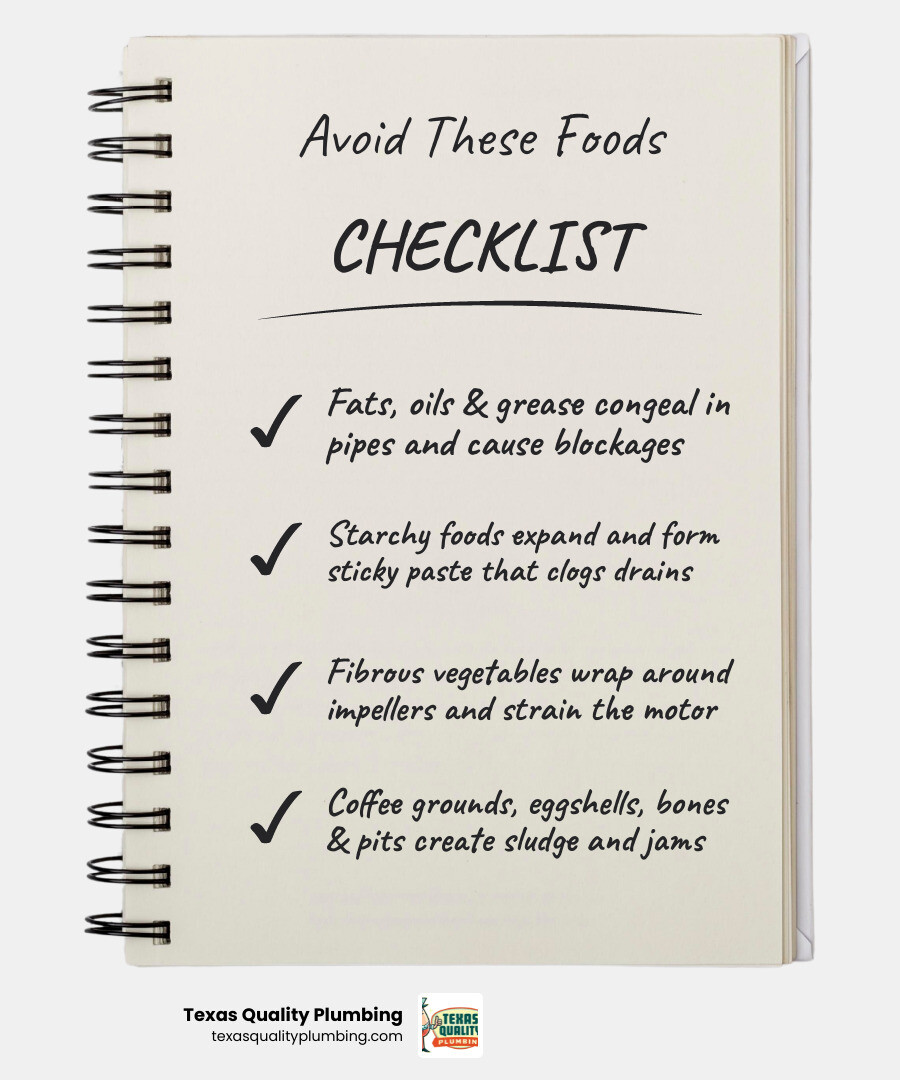
The foods you should never put in your garbage disposal include fats, oils, and grease; starchy foods like pasta, rice, and potatoes; fibrous vegetables like celery and corn husks; coffee grounds; eggshells; and hard items like bones, shellfish shells, and fruit pits.
Here’s a quick reference:
- Fats, oils, and grease (FOG) – congeal in pipes and cause blockages
- Starchy foods (pasta, rice, potato peels) – expand with water and form a sticky paste
- Fibrous vegetables (celery, asparagus, corn husks) – wrap around the impeller and strain the motor
- Coffee grounds – clump into sludge and settle in drain pipes
- Eggshells – membranes tangle in the grinder and accumulate in pipes
- Bones, shellfish shells, and fruit pits – too hard for the disposal and can cause serious jams
Your garbage disposal is one of the most convenient appliances in your Houston kitchen — until it isn’t. A quick scrape of the plate into the sink feels harmless, but the wrong foods can quietly damage your plumbing long before you notice a problem. In fact, plumbers across Houston report that the day after Thanksgiving is one of their busiest days of the year, largely because of what gets sent down the drain during holiday cooking. As of June 2026, garbage disposals remain one of the top sources of preventable plumbing calls in residential homes. The good news? Knowing what to avoid takes just a few minutes to learn.
Understanding the Foods You Should Never Put in Your Garbage Disposal
To truly understand why certain food scraps cause so much trouble, we first have to debunk a major kitchen myth: garbage disposals do not have spinning, knife-like blades.
Instead, your garbage disposal works using centrifugal force. When you flip the switch, a motor spins a flat plate equipped with blunt metal keys called impellers. These impellers fling the food scraps outward against a stationary, textured metal ring known as a grind ring (which functions much like a heavy-duty cheese grater). This process grinds the food into tiny particles that can easily pass through the wastewater holes and flow into your home’s downstream plumbing system.
When you drop the wrong items down the sink, you are either overwhelming this grinding mechanism or sending materials into your pipes that will inevitably cause a backup. Hard items can jam the spinning plate, while sticky or fibrous materials can bypass the grind ring entirely, wrapping around the moving parts.
If you are already noticing that your unit is struggling to process waste, it helps to understand the Food That Damage Garbage Disposals so you can prevent a major breakdown. Furthermore, learning Why Garbage Disposal Keeps Jamming is the first step toward keeping your kitchen running smoothly and avoiding an emergency plumbing visit.
6 Foods You Should Keep Out of Your Kitchen Drain

Managing kitchen waste efficiently is all about knowing the mechanical limits of your appliances. While a disposal is excellent for light, soft food scraps, treating it like a secondary trash can is a recipe for a plumbing disaster. To maintain proper household drain safety and prevent stubborn clogs, let’s look at the six primary culinary offenders you should keep far away from your sink.
1. Fats, Oils, and Grease (FOG)
It might go down the drain as a warm, clear liquid, but fats, oils, and grease (often referred to in the plumbing industry as FOG) are the absolute worst enemies of your kitchen plumbing. This category doesn’t just include cooking oil and bacon grease; it also covers everyday items like butter, margarine, lard, poultry skin, meat trimmings, heavy cream, and even peanut butter.
Once liquid grease hits the cold environment of your underground sewer pipes, it cools rapidly and congeals into a thick, waxy solid. Over time, this grease clings to the walls of your pipes, catching other food debris and narrowing the passage until water can no longer pass through.
Nationwide, grease is related to up to 65 percent of sewer overflows, making it a major municipal headache as well as a household disaster.
Proper Disposal Methods:
- Never pour warm grease down the sink. Instead, let it cool and solidify in an old jar, coffee can, or aluminum foil, then discard it directly in your trash can.
- For liquid cooking oils, you can use specialized oil solidifiers like FryAway. These plant-based powders transform liquid oil into a solid, easy-to-toss block in a matter of minutes.
- Always wipe down greasy pans with a paper towel before rinsing them in the sink.
2. Starchy Foods: Why Pasta and Rice are Foods You Should Never Put in Your Garbage Disposal
Starchy staples like pasta, rice, oatmeal, bread, and potato peels seem soft and harmless, but they behave very differently once they enter your plumbing.
When starchy foods are exposed to water, they act like tiny sponges, absorbing liquid and expanding to several times their original size. As the disposal grinds them, they don’t break down into clean liquid; instead, they combine with water to create a thick, sticky, paste-like slurry. This gluey paste coats the inside of your drain lines, trapping other debris and creating a dense barrier that blocks water flow.
Potato peels are especially notorious. Because they are thin and slippery, they can easily slip past the spinning impellers without being fully ground, settling in the P-trap to form a watertight clog. If you are dealing with a sink that takes forever to clear after a starchy meal, you may need to look into Fixing Slow Draining Garbage Disposals to restore proper flow.
3. Fibrous Vegetables and Stringy Peels
Healthy greens are great for your body, but they are incredibly tough on your garbage disposal. Vegetables with long, stringy fibers include:
- Celery
- Corn husks and corn silk
- Asparagus
- Artichokes
- Rhubarb
- Onion skins
The long, thread-like fibers in these vegetables do not grind easily. Instead, they act like strong string, wrapping themselves around the spinning impellers and the motor shaft beneath the plate. As these fibers accumulate, they create immense friction, putting severe strain on the motor. If left unchecked, this entanglement can cause the motor to overheat, trip your electrical breaker, or suffer total motor burnout, requiring a complete replacement of the unit.
4. Coffee Grounds: The Common Foods You Should Never Put in Your Garbage Disposal
It is a incredibly common belief that coffee grounds are safe for the disposal, with some online myths even claiming they help scrub the pipes or eliminate bad odors. In reality, plumbers dread finding coffee grounds in a drain.
While coffee grounds are finely ground and pass through the disposal easily, they do not dissolve in water. When poured down the sink, they settle in the low points of your plumbing—specifically the P-trap. As more grounds accumulate, they clump together with water and residual oils to form a dense, sludgy mass that behaves exactly like wet sand. This heavy sediment buildup eventually chokes off your drain line completely.
Alternative Uses for Coffee Grounds:
- Composting: Coffee grounds are rich in nitrogen, making them a fantastic addition to your backyard compost bin.
- Garden Fertilizer: You can sprinkle dried grounds directly into your garden soil to nourish acid-loving plants like blueberries, azaleas, and hydrangeas.
- Natural Deodorizer: Place a bowl of dry grounds in your fridge or pantry to absorb unwanted odors safely.
5. Eggshells and the Membrane Myth
Another persistent kitchen myth is that putting eggshells down the disposal will help “sharpen” the blades. As we learned earlier, garbage disposals do not have sharp blades, so there is nothing to sharpen!
Eggshells are actually highly problematic for two reasons:
- The Sticky Membrane: The thin, paper-like membrane lining the inside of an eggshell is incredibly stretchy and sticky. When ground, this membrane can easily detach and wrap around the spinning components, causing impeller entanglement.
- Pipe Accumulation: The shell itself breaks down into tiny, sand-like mineral shards. These heavy particles do not float; they sink to the bottom of your pipes, mixing with grease and other organic waste to create a stubborn, concrete-like blockage deep within your plumbing system.
Instead of sending eggshells down the drain, toss them in your compost pile or crush them up to use as a natural calcium source for your garden soil.
6. Animal Bones, Shellfish, and Fruit Pits
It should go without saying that extremely hard items do not belong in a garbage disposal. This includes:
- Beef, pork, and large poultry bones
- Shellfish exoskeletons (shrimp, crab, and lobster shells)
- Hard fruit pits (peach, plum, cherry, and avocado pits)
- Unpopped popcorn kernels and nut shells
While premium, high-horsepower disposals (1 HP models) are sometimes rated by manufacturers to handle small cooked bones, standard home models simply cannot process them safely. Hard items will bounce around inside the grinding chamber, chip or break the impellers, dent the grind ring, or wedge themselves tightly between the rotating plate and the outer wall, causing an instant motor jam. To protect your appliance, always scrape bones, shells, and pits directly into your trash can.
Best Practices for Garbage Disposal Maintenance
Taking care of your garbage disposal doesn’t require hours of work. By adopting a few simple daily habits, you can dramatically extend the lifespan of your appliance and prevent foul kitchen odors.
- Always Run Cold Water: Always turn on a steady stream of cold water before you turn on the disposal, keep it running while the food is grinding, and let it run for at least 30 seconds after you turn the unit off. Cold water is crucial because it keeps any residual fats or grease solid, allowing the impellers to chop them up and flush them down the pipe before they can coat the walls. Hot water melts grease, causing it to coat the pipes further down the line where it will eventually cool and clog.
- Feed Scraps in Small Batches: Never stuff a large volume of food down the drain all at once. Feed items slowly, in small batches, to avoid overloading the motor.
- Keep it Clean and Fresh: Over time, food residue can build up on the underside of the splash guard and along the grind ring, leading to unpleasant smells. If your sink is starting to smell, check out these easy Fixes for Garbage Disposal Odors to clean and sanitize your system safely.
Garbage Disposal Scrap Comparison
| Safe to Dispose (In Small Amounts) | Never Put Down the Disposal |
|---|---|
| Soft fruit scraps (citrus peels, apple cores) | Fats, oils, cooking grease, and butter |
| Cooked vegetable scraps (non-fibrous) | Pasta, rice, oatmeal, and bread |
| Small, soft leftovers | Celery, corn husks, and asparagus |
| Ice cubes (great for cleaning!) | Coffee grounds and eggshells |
| Liquid or pureed foods | Large bones, shellfish, and fruit pits |
Troubleshooting and When to Call a Professional
If your garbage disposal suddenly stops working, don’t panic. There are a few safe, basic troubleshooting steps you can take before calling in the professionals.
- Check the Reset Button: If the motor overloads or overheats, a built-in thermal breaker will trip to prevent damage. Look under your sink at the very bottom of the disposal unit. You should see a small red button. If it has popped out, wait about ten minutes for the motor to cool down, push the button back in, and try running the unit with cold water.
- The Hex Wrench Manual Turn: If the unit hums but won’t spin, a hard object is likely jammed between the rotating plate and the grind ring. Never put your hands inside the disposal. First, unplug the unit or turn off the breaker. Locate the hex-shaped hole in the center of the bottom of the unit. Insert a standard 1/4-inch Allen wrench (hex key) and turn it back and forth. This manually rotates the plate, allowing you to safely break the jam free. Once the plate spins freely, use tongs to retrieve the loose object from the drain, plug the unit back in, reset the red button, and test it.
If these steps do not solve the problem, or if you hear unusual noises, it is time to investigate further. For example, understanding Why Garbage Disposal Makes Noises or identifying Strange Noises from Garbage Disposal can help you determine if a component is broken.
Keep an eye out for Signs Garbage Disposal Is About to Fail, such as frequent jamming, persistent leaks, or a motor that constantly overheats. When DIY troubleshooting isn’t enough, knowing When to Contact Garbage Disposal Repair will save you time, stress, and potential water damage to your kitchen cabinetry.
Frequently Asked Questions about Garbage Disposal Care
Can I put small fish bones down the disposal?
While fish bones are much smaller and softer than beef or chicken bones, we still recommend tossing them in the trash. Small, needle-like fish bones can easily slip through the grinding mechanism and get wedged beneath the spinning plate or impeller keys, causing a sudden jam. Furthermore, if your home has older plumbing—such as cast-iron pipes common in older Houston neighborhoods—even small bone fragments can catch on the rough interior walls of the pipes, increasing your risk of a downstream clog.
Does grinding ice really sharpen the disposal blades?
As we’ve established, disposals have blunt impellers rather than sharp blades, so ice won’t sharpen them. However, grinding a handful of ice cubes is still an excellent maintenance practice! The hard ice chips act as a natural abrasive, knocking stubborn food debris and slimy buildup off the spinning plate and grind ring. For an added bonus, toss in a few citrus peels (like lemon or lime) with the ice to deodorize the chamber and leave your sink smelling fresh.
What should I do if my disposal hums but doesn’t grind?
A humming sound with no movement means the motor is receiving electrical power but the grinding plate is physically jammed. Turn off the unit immediately. Leaving a jammed disposal turned on can quickly burn out the electric motor or trip your home’s circuit breaker. Use the hex wrench method described above to manually free the jam from the bottom of the unit. If the plate spins freely but the motor still only hums when turned back on, it is one of the classic Signs Garbage Disposal Needs Repair and likely requires professional attention.
Conclusion
Your kitchen garbage disposal is a hardworking helper, but it relies on you to make smart choices about what goes down the drain. By keeping grease, starches, fibers, coffee grounds, eggshells, and hard items out of your sink, you can avoid frustrating clogs and keep your kitchen running smoothly.
When troubleshooting isn’t enough, or if you are facing a stubborn clog or a leaking unit, the team at Texas Quality Plumbing is here to help. We proudly provide fast, reliable residential plumbing services throughout the Greater Houston area, including Houston, Pasadena, and Jersey Village.
If you need expert assistance, don’t hesitate to reach out to us:
- For residents in the eastern suburbs, we offer dedicated Garbage Disposal Repair in Pasadena to get your kitchen back in working order quickly.
- If you are located in the northwestern area, our technicians provide prompt Garbage Disposal Repair in Jersey Village to resolve any plumbing issues.
- For any complex installation, persistent leak, or motor replacement, always rely on licensed Professionals for Garbage Disposal Repair.
Ready to restore your kitchen’s convenience? Schedule professional garbage disposal services today with the friendly, experienced team at Texas Quality Plumbing!