
Why a Plumbing Maintenance Checklist for Texas Homeowners Is Non-Negotiable
A plumbing maintenance checklist for Texas homeowners is one of the smartest tools you can use to protect your home — especially in Houston, where hard water, clay soils, and sudden freezes create plumbing challenges that most national guides simply ignore.
A single dripping faucet can waste over 3,000 gallons of water a year. A running toilet can drain 200 gallons in a single day. Multiply those numbers across a home that never gets a routine check, and the water waste — and repair bills — add up fast.
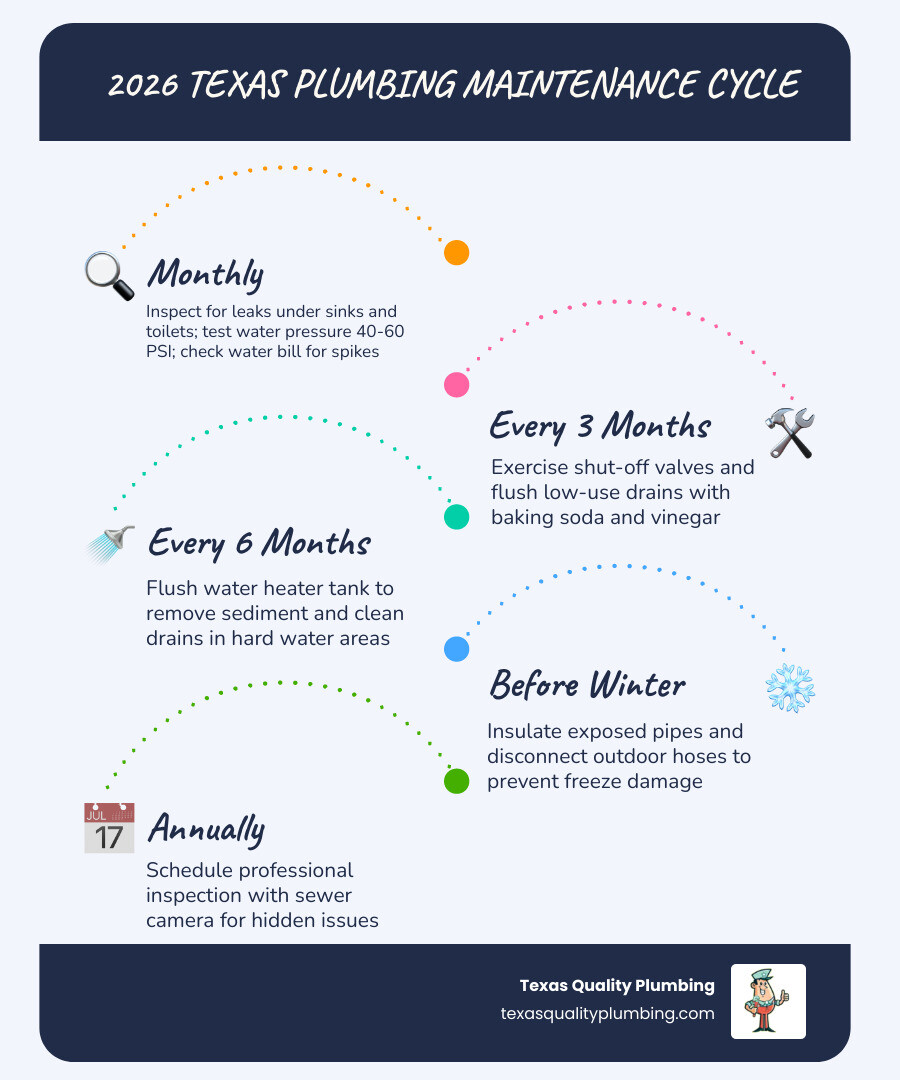
Here is a quick overview of the core tasks every Texas homeowner should stay on top of:
Texas Plumbing Maintenance Checklist — Quick Reference
| Frequency | Task |
|---|---|
| Monthly | Check for leaks under sinks, around toilets, and near the water heater |
| Monthly | Test water pressure (target: 40–60 PSI) |
| Monthly | Monitor water bill for unexpected spikes |
| Every 3 months | Exercise shut-off valves; flush low-use drains |
| Every 6 months | Flush water heater (hard water areas like Houston) |
| Every 6 months | Clean drains with baking soda and vinegar |
| Annually | Schedule a professional plumbing inspection |
| Before winter | Insulate exposed pipes; disconnect outdoor hoses |
| Each spring | Inspect outdoor faucets, irrigation lines, and hose bibs |
This guide walks you through every item on that list — with Texas-specific tips built in so nothing gets missed.
Essential Monthly Tasks for Your plumbing maintenance checklist for texas homeowners

Monthly plumbing checks are simple, fast, and much easier than discovering a leak when guests are arriving or when you are already late for work. We recommend building these tasks into your normal home routine.
Your monthly checklist should include:
- Check under sinks for moisture, staining, corrosion, or musty smells.
- Look around toilets for soft flooring, rocking, or water at the base.
- Inspect faucets and showerheads for drips or mineral buildup.
- Look at exposed pipes near the water heater, laundry room, and garage.
- Review your water bill for sudden increases.
- Listen for running water when no fixtures are on.
- Run water in guest baths or other low-use drains to keep traps from drying out.
- Use your water meter to check for hidden leaks.
A water meter test is one of the best DIY leak checks. Turn off all fixtures and water-using appliances, then watch the meter. If it keeps moving, there may be a hidden leak somewhere in the house or yard.
This is also a good time to inspect fixture parts that quietly wear out, especially toilet flappers. Silent toilet leaks are sneaky little overachievers when it comes to wasting water. For more proactive prevention tips, see Prevent Plumbing Problems with Maintenance.
Identifying Slab Leaks and Soil Shifts
Houston-area homes can be especially vulnerable to plumbing movement because clay-heavy soils expand when wet and shrink during dry periods. That movement can stress pipes below the slab and around the foundation.
Watch for these slab leak and soil-shift warning signs:
- Damp or unexpectedly warm spots on floors
- Cracks in walls or flooring
- Mildew smells with no obvious source
- Water bill spikes without a clear reason
- A drop in water pressure
- The sound of running water when everything is off
- Soggy areas around the foundation
These issues do not always mean a slab leak, but they are never good signs to ignore. If your home is older, keep an eye out for broader signs of wear too, such as recurring leaks, corrosion, or fixture failures. Our guide to signs of aging pipes in a property can help you spot the difference between normal wear and a system that needs professional attention.
Maintaining Proper Water Pressure in Houston
Water pressure that feels “strong” is not always a good thing. For most homes, the sweet spot is about 40 to 60 PSI. Once pressure gets too high, it can stress supply lines, fixture seals, appliance hoses, and your water heater.
You can test it with a simple pressure gauge attached to an outdoor spigot or laundry bib. Check it when no water is running elsewhere in the house.
Use this rule of thumb:
- 40 to 60 PSI: ideal range
- 60 to 80 PSI: worth monitoring
- Above 80 PSI: too high and may require a pressure-reducing valve
High pressure can shorten the life of your plumbing system. Low pressure can point to leaks, mineral buildup, failing valves, or supply issues. If readings are inconsistent or outside the safe range, professional help is the smart move. Learn more about common system checks in our overview of plumbing services offered by technicians.
Seasonal Protection: Managing Texas Heat and Winter Freezes
Texas weather likes to keep homeowners humble. Long hot seasons, humidity, heavy rain, and occasional hard freezes all affect plumbing materials differently. Pipes expand and contract, outdoor fixtures age faster, and small weaknesses show up at the worst possible time.
That is why seasonal maintenance matters just as much as monthly checks.
In spring and fall, we recommend:
- Inspecting hose bibs and outdoor faucets
- Looking for cracked caulk around exterior plumbing penetrations
- Checking sprinkler zones for broken heads or soggy patches
- Examining exposed pipes for corrosion or insulation damage
- Testing shut-off valves so they do not seize up
- Reviewing your freeze-prep supplies before winter arrives
For a deeper seasonal prep list, see Preparing Your Plumbing for Winter.
Winterizing Your plumbing maintenance checklist for texas homeowners
Houston winters are usually mild, until they are not. A short cold snap can still freeze exposed pipes in attics, garages, exterior walls, and outdoor plumbing. The biggest mistake we see is assuming a Texas freeze will not last long enough to matter.
Before freezing weather arrives:
- Insulate exposed pipes in attics, garages, and crawl-access areas.
- Disconnect garden hoses from outdoor spigots.
- Cover or protect outdoor hose bibs.
- Seal drafts near pipes where cold air can enter.
- Know how to shut off water to the home quickly.
When a freeze warning is issued:
- Open cabinet doors under sinks on exterior walls
- Let faucets drip slightly on vulnerable lines
- Keep indoor heat consistent
- Avoid turning the thermostat way down overnight
- Check attic or garage pipes if safely accessible
If you have had repeat leaks after cold weather, it may be time to evaluate whether sections of aging pipe should be replaced. Our article on when to consider repipe service explains when repairs stop being the long-term answer.
Summer Readiness and Irrigation Maintenance
Summer plumbing problems in Greater Houston are less dramatic than frozen pipes, but they are very common. Heat, humidity, and heavy outdoor water use can reveal leaks fast.
Each spring and early summer, check:
- Irrigation heads for misaligned spray or broken nozzles
- Pool auto-fill lines for constant trickling
- Outdoor faucets for drips and loose handles
- Hose connections for wear
- Exterior walls for moisture staining
- Washing machine hoses and water heater areas before peak summer use
Houston humidity can also make it harder to notice slow leaks until staining, mildew, or corrosion appears. If fixtures show green, blue, or chalky deposits, corrosion or hard water may be at work. Our article on signs of pipe corrosion in the home covers what to watch for.
Specialized Care for Texas Water Heaters and Drains
Water heaters in Houston work harder than many homeowners realize, and hard water makes that job tougher. Mineral-rich water leaves sediment inside tank-style heaters and scale inside tankless systems. Over time, that buildup reduces efficiency, strains components, and can shorten equipment life.
For many Texas homeowners, flushing a standard tank water heater every six months is a smart schedule, especially in hard water areas. That is more frequent than the once-a-year advice you may see in generic national guides, because Houston-area water conditions can create faster mineral accumulation.
Your water heater maintenance checklist should include:
- Checking for rust, corrosion, or moisture around the base
- Listening for popping or rumbling sounds
- Flushing sediment from tank units on a regular schedule
- Testing temperature and pressure relief valve function
- Looking at the anode rod during professional service
- Watching for inconsistent hot water
If you have a tankless unit, descaling on the recommended schedule is just as important. Our tankless water heater maintenance guide explains the basics.
Safe Drain Cleaning Methods for Your plumbing maintenance checklist for texas homeowners
Drain maintenance should be gentle and consistent. Chemical drain cleaners may look convenient, but they can be rough on older pipes, joints, and some types of drain lines. In homes with aging plumbing, they often create more trouble than they solve.
Safer drain care methods include:
- Flushing kitchen and bath drains with hot water regularly
- Using baking soda followed by vinegar for light organic buildup
- Rinsing thoroughly with hot water afterward
- Installing mesh strainers to catch hair and debris
- Avoiding grease, coffee grounds, wipes, and starchy foods down drains
Natural enzyme cleaners can also help with ongoing maintenance when used as directed. They are generally better suited for routine care than emergency clog removal.
Call for professional drain cleaning if you notice:
- Repeated slow drains
- Gurgling sounds
- Odors coming back quickly
- Multiple fixtures backing up
- Water rising in tubs when toilets flush
For homeowner-safe tips, visit Tips for Effective Drain Cleaning. If buildup is deeper in the line, our guide to the benefits of hydro jetting explained shows when stronger professional cleaning is worth it.
Addressing Houston’s Hard Water Challenges
Hard water affects more than your shower door. In Greater Houston homes, mineral deposits can build up on faucets, showerheads, appliance valves, and inside pipes. That can reduce flow, wear out fixtures faster, and force water heaters to work harder.
Common hard water signs include:
- White, chalky buildup on fixtures
- Spots on dishes and glassware
- Reduced water flow from faucet aerators
- Stiff laundry or soap that does not rinse well
- Frequent fixture cartridge or valve issues
If these symptoms sound familiar, it may be worth exploring filtration or treatment options. Learn more in our guides to water filtration for hard water and the benefits of water filtration systems.
Professional Inspections and Emergency Preparedness
DIY maintenance is important, but not every plumbing issue shows itself under a sink with a flashlight. Some of the most expensive problems begin behind walls, under slabs, or in buried sewer lines.
That is why we recommend an annual professional plumbing inspection for most Houston-area homes, and more frequent checks if your home is older, has recurring clogs, or has a history of leaks.
Every homeowner should also know these emergency shut-off points:
- Main whole-house water shut-off
- Water heater shut-off valve
- Toilet shut-off valves
- Sink shut-off valves
- Washing machine supply shut-offs
- Refrigerator ice maker shut-off, if accessible
Do not wait until water is spraying across the room to figure out where these are. A quick valve tour today can save a major headache later.
If sewer issues are suspected, camera inspections can identify root intrusion, buildup, offset joints, and pipe damage without guesswork. Read our Sewer Camera Inspection Guide and Do You Need Sewer Camera Inspection? to learn when that step makes sense.
When to Schedule a Professional Plumbing Review
A professional inspection is especially important when you notice symptoms that keep returning. Homeowners can handle visual checks and simple cleaning, but persistent system-wide problems need better diagnostics.
Schedule a plumbing review if you notice:
- Slow drains in more than one fixture
- Recurring clogs
- Sewer odors
- Gurgling toilets or drains
- Unexplained wet spots indoors or outdoors
- Water pressure changes
- Sudden increases in water bills
- Rust-colored water or recurring water heater issues
These are all clues that a deeper issue may be developing. Our resources on signs that require sewer inspection and hydro jetting for clogged drains explain common next steps.
Garbage Disposal and Fixture Maintenance
Garbage disposals and everyday fixtures deserve a place on your checklist too. They are used constantly, and they often give warning signs before they fail.
For disposals:
- Run cold water before, during, and after use
- Avoid fibrous foods, grease, bones, and large scraps
- Listen for humming, grinding, or irregular noises
- Watch for frequent resets or poor drainage
- Clean with ice and mild dish soap occasionally
For fixtures:
- Remove and rinse faucet aerators
- Check under sinks for P-trap leaks
- Tighten loose handles
- Watch for drips after the fixture is turned off
- Inspect caulk and seals around sinks and tubs
If your disposal smells bad, jams often, or leaks underneath, it may be heading toward failure. See Garbage Disposal Repair in Pasadena and Signs Garbage Disposal is About to Fail for more details.
Frequently Asked Questions about Texas Plumbing Maintenance
Why do I need to flush my water heater more often in Texas?
Because hard water minerals build up faster here than in many other regions. That sediment settles in tank water heaters and creates a barrier between the burner or heating elements and the water. The result can be lower efficiency, odd noises, uneven hot water, and more wear on the system.
In many Houston homes, every six months is a practical flushing schedule. If you notice rumbling sounds, rusty water, or inconsistent hot water, do not ignore it. Our article on signs a water heater needs immediate repair covers serious warning signs.
How can I detect a silent toilet leak?
Use the food coloring test:
- Remove the toilet tank lid.
- Add a few drops of food coloring to the tank.
- Wait 10 to 15 minutes without flushing.
- If color appears in the bowl, the flapper is leaking.
This is one of the easiest checks on any plumbing maintenance checklist for Texas homeowners, and it matters because even a silent leak can waste a surprising amount of water over time. While this question is toilet-related, if you are also troubleshooting hot water issues elsewhere in the home, our guide on signs you need water heater repair may help.
What are the signs of a slab leak in Houston?
The most common slab leak clues include:
- Warm spots on the floor
- New cracks in walls or flooring
- Musty odors
- Low water pressure
- High water bills without higher usage
- Water sounds when no fixtures are running
- Damp flooring or wet baseboards
Because Houston-area soil can shift and stress buried pipes, slab leak symptoms should always be checked promptly. If your home has widespread pipe wear or repeat underground leak issues, our article on why consider repipe services explains when a larger system upgrade may be worth discussing.
Conclusion
A strong maintenance routine does more than prevent leaks. It helps protect your home value, reduce water waste, and avoid the kind of surprise plumbing problems that ruin an otherwise normal week.
For homeowners across Houston, Katy, Pearland, Cypress, The Woodlands, Pasadena, League City, Sugar Land, Baytown, and surrounding communities we serve, the best approach is simple: handle the monthly basics, stay ahead of seasonal risks, and bring in professionals when warning signs appear.
If you want ongoing support, explore our Plumbing Maintenance Plan or browse All Services. When you are ready for expert help with inspections, leak detection, drain cleaning, water heaters, or emergency plumbing, schedule your professional inspection with Texas Quality Plumbing today.