
Sewer Line Repair vs. Replacement: What Houston Homeowners Need to Know First
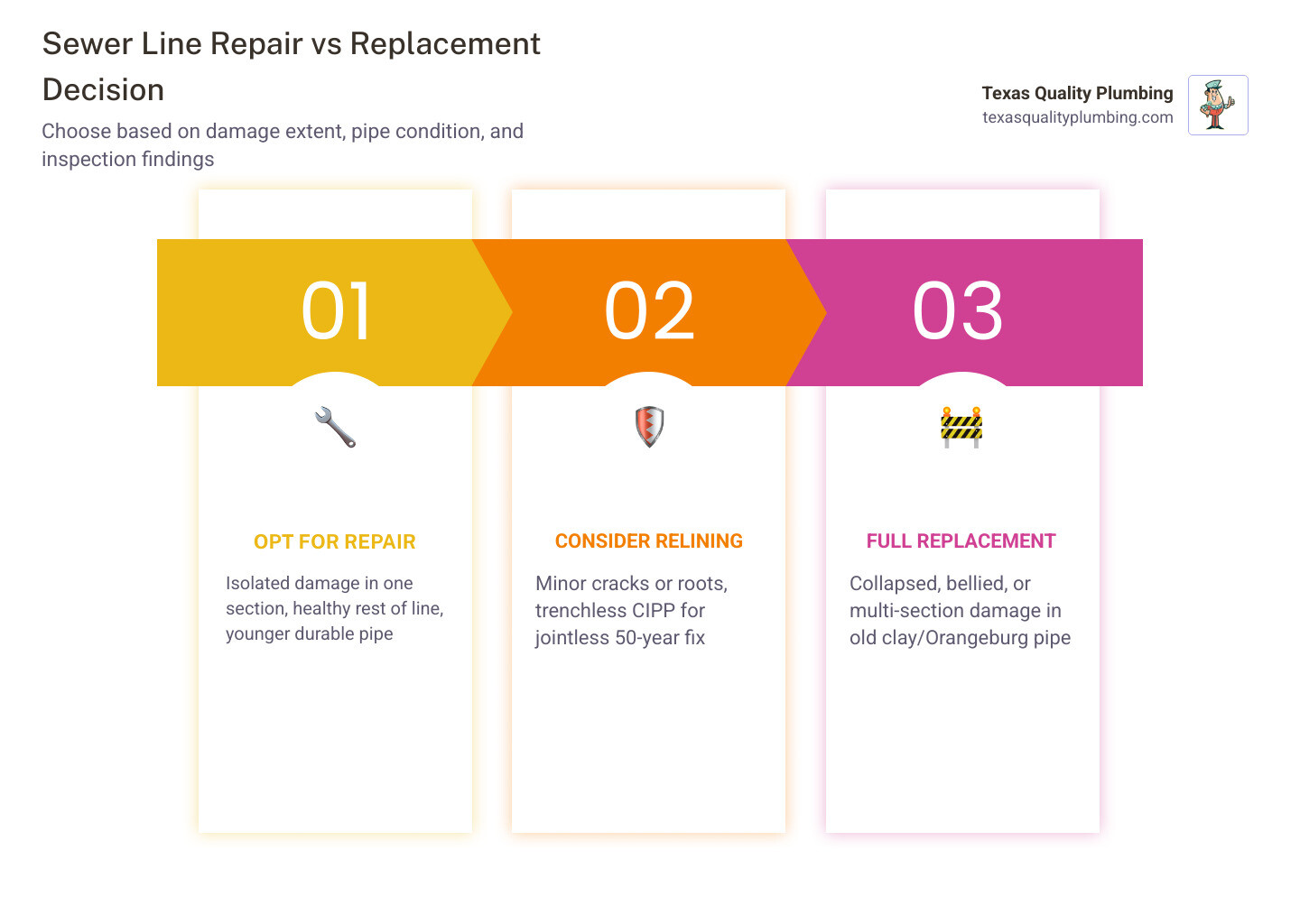
Understanding when sewer line repair vs replacement is needed can save you from either overpaying for a full dig-and-replace or wasting money on a short-term fix that fails again in a year. Here is a quick breakdown to help you decide:
Choose repair when:
- Damage is isolated to one section of the pipe
- The rest of the line is structurally sound
- The pipe is relatively young or made of durable material
- Trenchless methods like CIPP lining are viable
Choose replacement when:
- The pipe has collapsed, severely bellied, or is made of Orangeburg material
- Damage spans multiple sections of the line
- You have had repeated failures or recurring backups
- The pipe is aging cast iron or clay and nearing the end of its lifespan
No one wants to deal with a sewer problem. The smell, the backups, the disruption to your home — it is a stressful situation from the moment you notice something is wrong. And once a plumber tells you there is an issue underground, the next question hits fast: do you fix what is there, or replace the whole thing?
That question does not have a single right answer. It depends on what is actually happening inside your pipe — and the only reliable way to know is through a professional inspection. Skipping that step and guessing based on symptoms alone is one of the most common and costly mistakes Houston homeowners make.
This guide walks you through the key differences between repair and replacement, the warning signs that point to each, and how to make a confident, evidence-based decision for your home.
Early Signs Your Sewer Line Needs Attention
Sewer lines are “out of sight, out of mind” until they aren’t. Because these pipes are buried deep beneath your Houston lawn or even under your home’s foundation, they rarely fail all at once. Instead, they send out early distress signals. Recognizing these signs early can be the difference between a simple trenchless repair and a massive excavation project.
When a sewer line begins to fail, you might notice slow drains throughout the house. If only one sink is slow, it’s a localized clog. If every drain in the house seems sluggish, the problem is likely in the main line. You might also hear a strange “gurgling” sound from the toilet when you run the shower or the washing machine. This happens because air is trapped in the line by a blockage or a break.
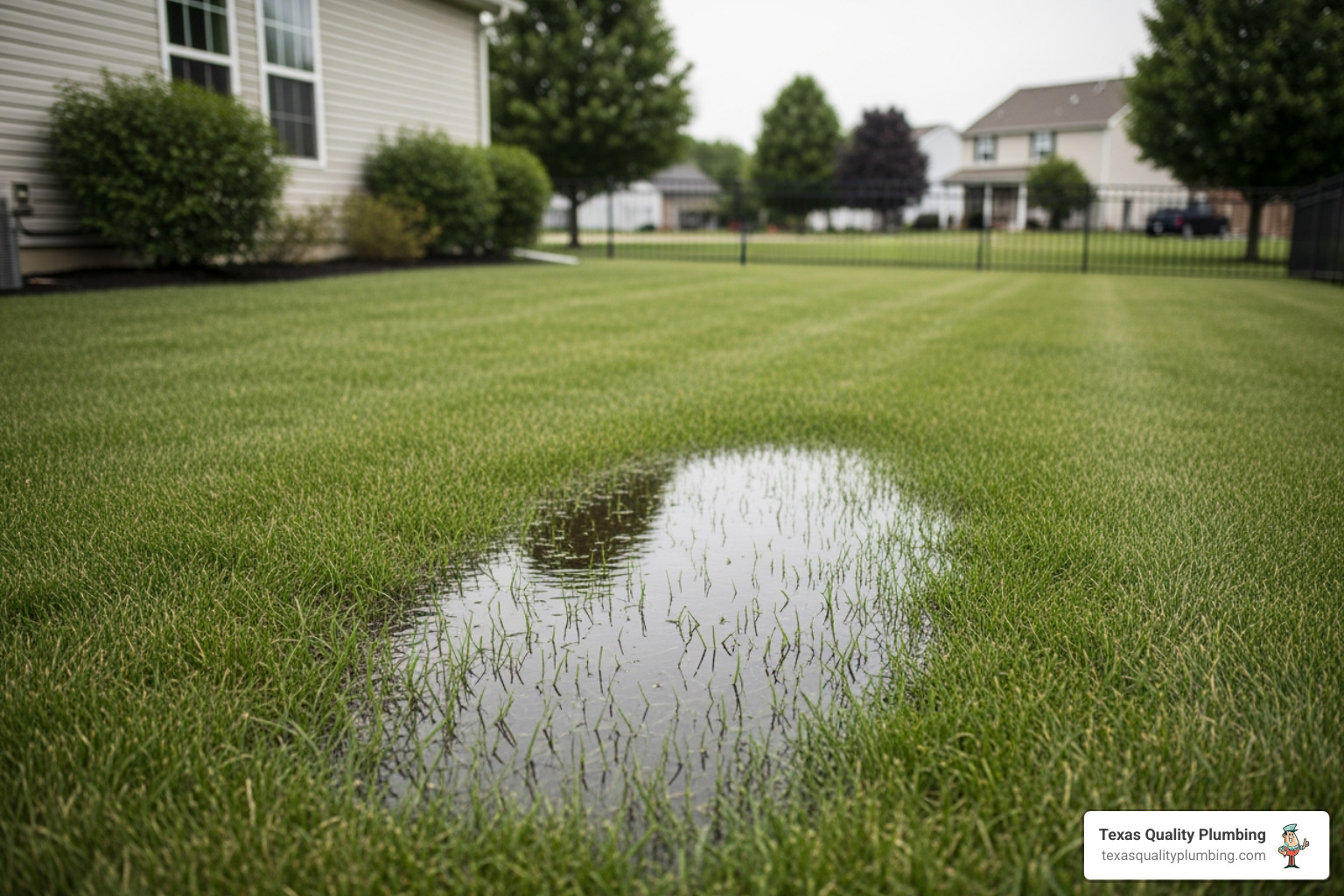
Then there are the more unpleasant signs. Sewage odors wafting up from drains or lingering in your yard are a major red flag. In some cases, you might even see physical evidence in your landscaping. If a pipe is leaking underground, the sewage acts as a potent (but dangerous) fertilizer. This can create “extra-green” patches of grass that follow the exact path of your sewer line. While a lush lawn sounds nice, if it’s only happening in one strip of the yard, it usually means your pipe is feeding the grass from below.
More info about signs of hidden sewer line problems
The Most Common Early Warning Signs Homeowners Notice
We often see homeowners ignore the small stuff until a major backup occurs. If you want to catch a problem before it becomes a catastrophe, watch for these red flags:
- Multiple Drain Clogs: If your kitchen sink, guest bath, and master shower are all backing up at once, the issue isn’t your hair in the drain—it’s the main sewer line.
- Bathtub Backups: When you flush the toilet, does water bubble up into the bathtub? This is a classic sign of a main line obstruction.
- Persistent Sewer Smells: Your home should never smell like a wastewater plant. If you catch whiffs of rotten eggs or “sewer gas,” there is a breach in the system.
- Yard Wet Spots: Soggy, foul-smelling spots in the grass when it hasn’t rained are a sign of a leaking pipe.
- Pest Activity: Rats and cockroaches are attracted to the moisture and waste in sewer lines. A sudden increase in pests can sometimes be traced back to a cracked pipe.
- Mold Risk: Excessive moisture from a broken line under the house can lead to mold growth behind walls or under floors.
Symptoms That Suggest a Bigger Structural Problem
While a clog can often be cleared with professional sewer line cleaning services, structural failures are different. These symptoms suggest that the pipe itself is physically damaged, which is when sewer line repair vs replacement is needed becomes the primary question.
Repeated backups are the biggest indicator of a structural issue. If you have to call a plumber to snake your lines every three to six months, you aren’t dealing with a simple clog; you likely have root intrusion or a “bellied” pipe. A belly occurs when a section of the pipe sinks due to soil erosion or ground movement—common in the expansive clay soils found in areas like Cypress and Sugar Land. This creates a low spot where waste collects, leading to constant blockages.
Root intrusion is another major culprit. Tree roots are naturally drawn to the moisture and nutrients inside sewer pipes. They can find even the tiniest crack in a clay or cast iron joint, grow inside, and eventually expand until they shatter the pipe.
More info about root intrusion signs in sewer lines
How to Tell when sewer line repair vs replacement is needed
Deciding between a repair and a full replacement isn’t something we do by guessing. Modern plumbing technology allows us to see exactly what is happening under the ground without digging a single hole. The industry standard for this is a sewer camera inspection.
During this process, we feed a high-definition, waterproof camera through your sewer line. This provides a real-time “pipe’s eye view” of the interior. We can see cracks, root clusters, offset joints, and even “scaling” (corrosion buildup) in old cast iron pipes. This visual evidence is the most important factor in determining when sewer line repair vs replacement is needed.
Beyond the camera, we may use other diagnostic tools:
- Hydrostatic Pressure Test: This helps us determine if the system can hold water or if there are leaks under the slab.
- Smoke Testing: We pump non-toxic smoke into the lines to see where it escapes, which helps find cracks that might be venting sewer gas into your home.
- Dye Testing: Using colored dyes to trace the path of a leak.
Why Camera Inspections Matter When Deciding when sewer line repair vs replacement is needed
Without a camera, you are essentially flying blind. A camera inspection allows us to map out exactly where the defects are. For example, if we find a single crack in a 40-foot line that is otherwise in perfect condition, a targeted repair is the obvious choice. However, if the camera shows that the entire length of the pipe is riddled with roots and has lost its structural integrity, we know a repair would just be a temporary patch.
A camera inspection also helps identify “bellies” or misaligned joints that a simple snake or hydro-jetting can’t fix. It provides the “second opinion” you need to feel confident that you aren’t spending money on a solution that won’t last.
More info about sewer camera inspection plumbing issues
What Inspectors Look For Before Recommending Repair or Replacement
When we perform a sewer camera inspection in Houston, we look at several key factors:
- Localized vs. Widespread Damage: Is the problem in one spot or everywhere?
- Pipe Material: Is it clay, cast iron, or PVC? Some materials are better candidates for repair than others.
- Flow Restriction: How much of the pipe’s diameter is lost to corrosion or roots?
- Pipe Depth and Access: How deep is the pipe? Is it under a concrete patio or a mature oak tree?
- Under-Slab Condition: If the damage is under the house’s foundation, trenchless repairs are often preferred to avoid “tunneling” or breaking the slab.
More info about why sewer line needs inspection
When Sewer Line Repair Is the Smarter Choice
Repairing a sewer line is almost always the preferred option when the damage is limited. If the structural integrity of the majority of the pipe is still good, there is no reason to replace the entire line. Spot repairs or sectional repairs can address a specific problem area—like a single broken joint or a small crack—without the expense of a full replacement.
If your home has a relatively young pipe (like PVC installed in the last 20–30 years) and a rogue tree root has found its way into one section, a targeted repair is efficient and cost-effective. We can often access these areas through existing cleanouts, minimizing the need for heavy machinery in your yard.
Best Situations for a Targeted Sewer Repair
We generally recommend a targeted repair in the following scenarios:
- Single Bad Section: The camera shows one specific break, and the rest of the line is clean.
- Recent Installation: If the pipe is only 10 or 15 years old, it likely has decades of life left once the specific leak is fixed.
- One Joint Failure: Sometimes soil shifts cause a single joint to pull apart. Re-sealing or replacing that one joint is a permanent fix.
- Minimal Structural Damage: The pipe is still round and hasn’t “ovalized” or collapsed.
When Relining Is a Better Middle Ground Than a Basic Repair
If you have more than one small crack but don’t want to dig up your entire driveway, Sewer Pipe Relining is an excellent “middle ground.” This is a trenchless method often referred to as CIPP (Cured-In-Place Pipe).
Think of relining like putting a “stent” in an artery. We insert a flexible liner saturated with epoxy resin into the existing pipe. Once in place, the liner is inflated and cured, forming a brand-new, jointless pipe inside the old one. This method is incredibly popular in areas like Jersey Village and Memorial because it protects expensive landscaping.
Benefits of Relining:
- Jointless Construction: Because there are no seams, tree roots have nowhere to enter.
- Durability: Relined pipes often come with 50-year warranties and can last 40–50+ years.
- Speed: Most relining jobs are completed in just 1–2 days, whereas a traditional replacement can take a week.
- Eco-Friendly: It requires less heavy equipment and produces zero waste from old pipe disposal.
More info about sewer camera inspection in Cypress
When Full Sewer Line Replacement Is Necessary
Sometimes, a repair is just a “band-aid” on a problem that requires surgery. If a pipe has completely collapsed, no amount of relining or spot fixing will restore the flow. In these cases, a full replacement is the only responsible choice.
One of the most common reasons for full replacement is “Orangeburg” pipe. Popular in some mid-century homes, Orangeburg is essentially wood pulp and tar. Over time, it absorbs water and flattens like a wet toilet paper roll. If you have Orangeburg, it cannot be repaired or relined—it must be replaced.
Red Flags That Usually Point to Replacement
Replacement becomes necessary when the system has reached a point of systemic failure. Look for these red flags:
- Widespread Corrosion: In old cast iron pipes, the interior can become so “scaled” and pitted that waste gets snagged constantly.
- Severe Bellies: If the pipe has sunk deep into the soil across a long distance, the only way to fix the “grade” (the slope that allows gravity to move waste) is to dig it up and reset it.
- Multiple Offset Joints: If the ground has shifted so much that every joint in the pipe is misaligned, a full replacement with modern, flexible materials is better.
- Diameter Upgrades: If you are adding a bathroom or an ADU (Accessory Dwelling Unit) to your Houston home, your old 3-inch line might not be able to handle the increased load.
How Pipe Age and Material Affect the Decision
The material of your sewer line is a huge factor in determining when sewer line repair vs replacement is needed.
- Vitrified Clay Pipe (VCP): Common in homes built before the 1970s. It’s durable against corrosion but very brittle. Roots love the joints. If the clay is shattered in multiple places, replace it.
- Cast Iron: Typically lasts about 50 years. After that, it rusts from the inside out, often losing the bottom of the pipe entirely.
- PVC/ABS: The modern standard. These pipes are smooth and root-resistant. Usually, only a spot repair is needed if they are physically damaged by digging or extreme soil shifts.
- Orangeburg: As mentioned, this is a “replace on sight” material. It is notorious for early failure and collapse.
More info about pre-purchase sewer line inspections
Trenchless vs Traditional Sewer Work: What Changes the Decision
When we talk about replacement, we have two main paths: Traditional Dig-and-Replace or Trenchless Methods like Pipe Bursting.
Traditional replacement involves digging a trench along the entire length of the sewer line. This is necessary if the pipe has collapsed or if the grade needs to be corrected. However, it is highly disruptive to your yard, driveway, and sidewalks.
Trenchless pipe bursting is a modern alternative. We pull a new HDPE (High-Density Polyethylene) pipe through the old one using a “bursting head” that breaks the old pipe apart as it goes. It essentially replaces the line without the long trench.
| Feature | Trenchless (Relining/Bursting) | Traditional Replacement |
|---|---|---|
| Digging Required | Minimal (1-2 small pits) | Full-length trench |
| Time to Complete | 1–2 Days | 3–7 Days |
| Landscaping Impact | Low | High |
| Longevity | 50+ Years | 50–100 Years |
| Best For | Preserving yards/patios | Collapsed or bellied pipes |
More info about sewer services
Pros and Cons of Repair vs Replacement for Disruption, Timeline, and Longevity
The decision often comes down to a balance of time and long-term value. A repair is faster and less disruptive in the short term. However, if you are repairing a 60-year-old cast iron pipe, you might find yourself back in the same situation next year when a different section fails. This is what we call “patching fatigue.”
A full replacement is a “reset button” for your plumbing. While it is more disruptive initially, it provides total peace of mind for the next 50 to 100 years. For many Houston homeowners, the “hidden” cost of traditional replacement isn’t the plumbing work—it’s the cost of restoring the St. Augustine grass, the stamped concrete patio, or the flower beds after the trench is filled. This is why trenchless methods are often the most cost-effective choice when restoration is factored in.
Common Mistakes to Avoid Before You Approve the Work
We want our neighbors in Atascocita, Pearland, and the Heights to make the best decision for their property. Avoid these pitfalls:
- Skipping the Inspection: Never agree to a sewer replacement without seeing the camera footage yourself.
- Choosing by Upfront Price Alone: A cheap “spot repair” is a waste of money if the rest of the pipe is about to fail.
- Ignoring Material Type: Don’t try to “save” an Orangeburg or failing clay pipe; you’re just delaying the inevitable.
- Overlooking Restoration: Ask if the quote includes putting your yard back together.
- No Warranty Questions: Always ask about the warranty on both the materials and the labor.
Questions to Ask Before You Decide when sewer line repair vs replacement is needed
Before you sign a contract, have a conversation with your plumber. We recommend asking:
- “Can I see the camera footage of the damage?”
- “What is the specific material of my current pipe?”
- “Is my pipe a candidate for trenchless relining or pipe bursting?”
- “If we do a spot repair, what is the risk of the rest of the line failing soon?”
- “Does your team handle the necessary permits with the city?”
- “What is the expected lifespan of this solution?”
Conclusion
Choosing between a sewer repair and a replacement is a big decision, but it doesn’t have to be a stressful one. By starting with a professional camera inspection, you can see the facts for yourself and choose the path that offers the best long-term value for your home.
Whether you are dealing with a minor root issue in Katy or a major systemic failure in River Oaks, our team at Texas Quality Plumbing is here to provide the honest, evidence-based guidance you deserve. We specialize in everything from quick repairs to advanced trenchless solutions, ensuring your home’s plumbing is back in top shape with as little disruption as possible.
Don’t guess when it comes to your home’s foundation and sanitation. If you’ve noticed gurgling toilets, slow drains, or strange odors, it’s time to get a clear answer.