

Why Houston Homeowners Need to Know How to Extend the Life of Your Water Heater
Knowing how to extend the life of your water heater can save you from a cold shower on a busy morning — and from an expensive emergency replacement you weren’t expecting. For Houston homeowners, the stakes are even higher. Houston’s notoriously hard water accelerates sediment buildup and corrosion inside your tank, which means local water heaters often wear out faster than the national average of 8–12 years. Without regular maintenance, some Houston units fail in as little as 6–8 years.
The good news? A few simple habits done consistently can push your water heater well past the 10–15 year mark — and keep your energy bills lower in the process.
Here’s a quick summary of the most effective ways to extend your water heater’s life:
- Flush the tank annually to clear sediment buildup (every 6 months if you have hard water)
- Inspect and replace the anode rod every 3–5 years to prevent tank corrosion
- Test the T&P relief valve once a year to confirm it’s working safely
- Set your thermostat to 120°F to reduce scale buildup and thermal stress
- Insulate hot water pipes to cut standby heat loss by up to 45%
- Install an expansion tank if you have a closed plumbing system
- Use vacation mode when you’re away for several days
- Watch for warning signs like rumbling noises, rusty water, or slow recovery times
- Schedule professional service for anything beyond basic DIY — especially on gas units or older tanks
Keep reading for step-by-step guidance on each of these, tailored to Houston’s specific water conditions and climate.
How to Extend the Life of Your Water Heater With the Right Maintenance Basics
A typical tank-style water heater is designed to last between 8 and 12 years. However, “typical” doesn’t always account for the unique environmental factors we face in Greater Houston. With proper care, we can often push that lifespan to 15 years or more. If you’ve invested in a tankless system, you’re looking at a potential 20-year service life, provided you don’t neglect the upkeep.
The secret to longevity isn’t luck; it’s a consistent maintenance schedule. By performing a few basic tasks, you prevent the gradual degradation that leads to catastrophic tank failure. Most manufacturers include maintenance requirements in their warranty terms, meaning neglecting your unit could actually void your protection.
Why Houston Water Heaters Wear Out Faster
In areas like Sugar Land, Pearland, and The Woodlands, we deal with significantly hard water. This water contains high concentrations of minerals like calcium and magnesium. As water heats up, these minerals crystallize and settle at the bottom of the tank, forming a thick layer of sediment.
This sediment acts as an insulator between the burner (or heating element) and the water. This forces the unit to run longer and hotter to reach the desired temperature, causing thermal stress that can crack the glass lining of the tank. Furthermore, Houston’s high humidity can accelerate external corrosion on fittings. Even our occasional “winter” cold snaps play a role; rapid temperature drops cause the tank to contract quickly, which can trigger leaks in units already weakened by sediment and rust.
How to Extend the Life of Your Water Heater With a Simple Yearly Routine
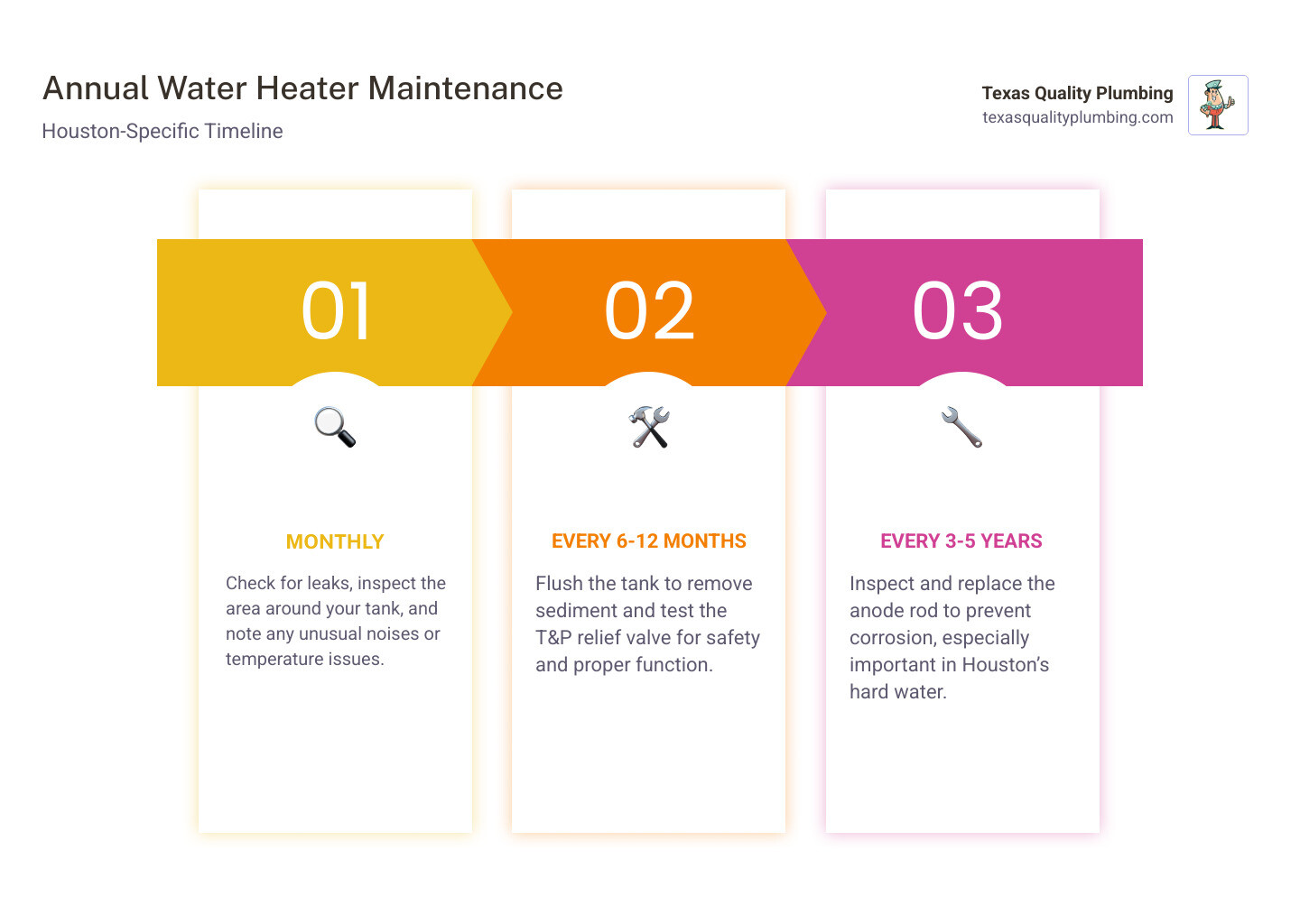
We recommend a “set it and forget it” approach to scheduling, perhaps tying your water heater check-up to another annual event like tax season or the start of summer. Your yearly routine should include:
- A full tank flush: To remove the “mud” of minerals at the bottom.
- A visual inspection: Looking for small drips or rust around the base.
- T&P valve testing: Ensuring the safety mechanism isn’t stuck.
- Anode rod check: Verifying your “bodyguard” rod hasn’t dissolved completely.
Keeping a simple maintenance log taped to the side of the unit is a great way to track when these tasks were last completed.
The Most Important DIY Tasks for Tank Water Heaters
Many homeowners feel intimidated by their water heater, but several of the most impactful maintenance tasks are perfectly safe for a DIY approach. Knowing When to Repair or Replace Your Water Heater starts with understanding how it works when it’s healthy.
How to Safely Flush and Drain Your Tank Water Heater
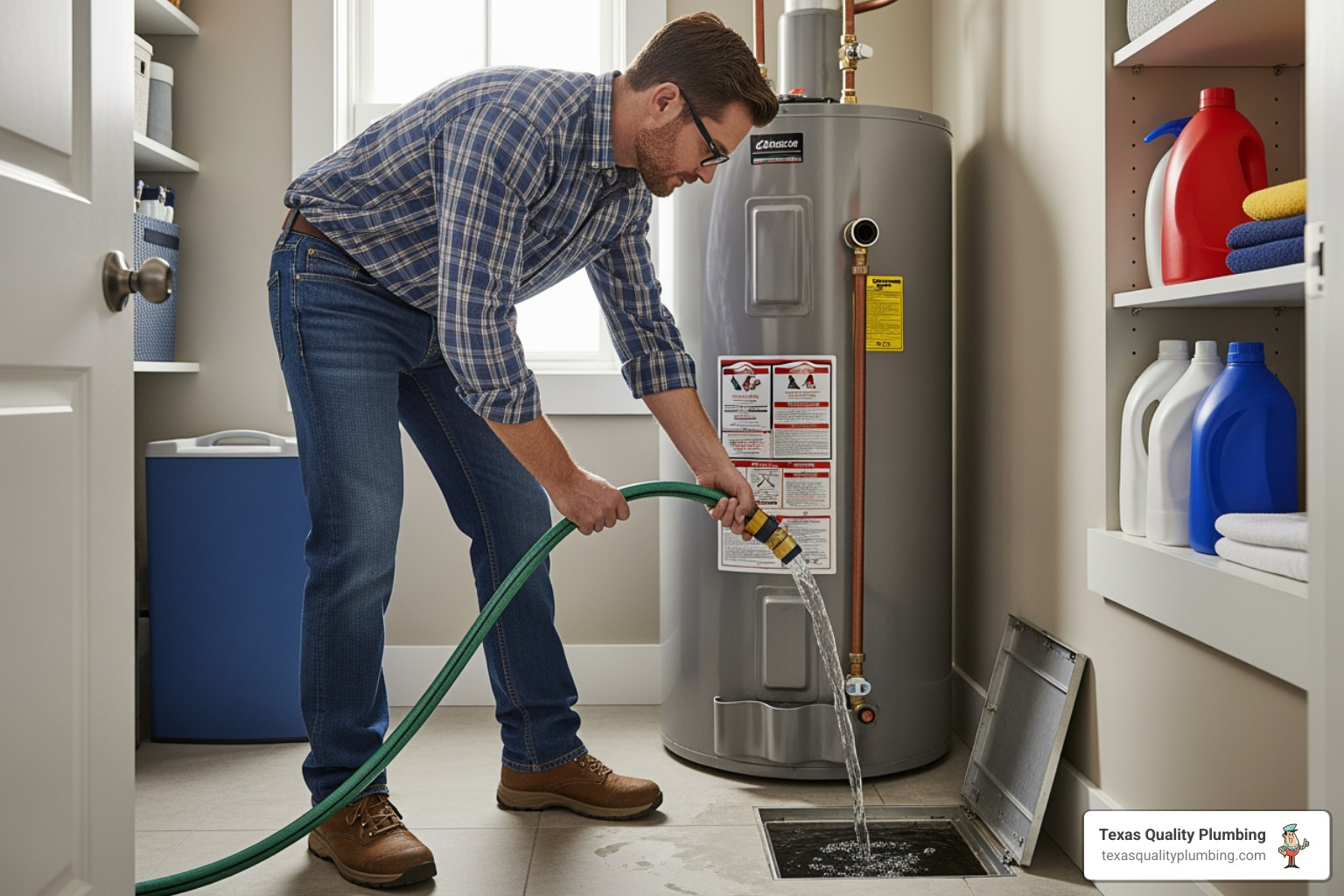
Flushing your tank is the single most important thing you can do to combat Houston’s hard water. Follow these steps:
- Turn off the power: For electric heaters, flip the breaker. For gas heaters, turn the dial to “Pilot.”
- Shut off the water: Close the cold water supply valve at the top of the tank.
- Cool it down: Ideally, do this after the tank hasn’t been used for several hours to avoid handling scalding water.
- Connect a hose: Attach a standard garden hose to the drain valve at the bottom. Run the other end to a floor drain or outside.
- Open a faucet: Turn on a hot water tap somewhere in the house to prevent a vacuum and allow the tank to drain faster.
- Drain and Flush: Open the drain valve. Once the tank is empty, turn the cold water supply back on in short bursts. This “stirs up” the sediment at the bottom so it can be pushed out the hose. Continue until the water runs clear.
- Refill: Close the drain valve, remove the hose, and turn the cold water supply back on. Keep the indoor hot water faucet open until water flows steadily (this bleeds the air out).
- Restore Power: Only turn the electricity or gas back on once the tank is completely full.
How to Test the T&P Relief Valve and Why It Matters
The Temperature and Pressure (T&P) relief valve is your heater’s primary safety feature. If the pressure inside the tank gets too high, this valve opens to release water and steam, preventing a potential explosion.
To test it, place a bucket under the discharge pipe. Lift the lever on the valve briefly. You should hear a rush of water and see it exit the pipe. When you let go, the valve should snap shut and stop the flow completely. If it keeps dripping or won’t move, the valve has failed and needs immediate replacement by a professional.
How to Set the Right Temperature to Extend Efficiency and Service Life
Most water heaters come from the factory set at 140°F, but we recommend turning it down to 120°F. This lower setting provides plenty of hot water for most families while significantly reducing the rate of mineral scale buildup. It also saves energy and prevents accidental scalding, making your home safer for children and seniors.
Corrosion, Hard Water, and Pressure Problems That Shorten Water Heater Life
Beyond sediment, there are “invisible” enemies like electrolysis and high water pressure that can end a water heater’s life prematurely.
What the Anode Rod Does and When to Inspect or Replace It
Inside every steel tank is a “sacrificial” anode rod. Usually made of magnesium or aluminum, this rod’s sole job is to corrode so your tank doesn’t. Through a process called electrolysis, the minerals in the water attack the rod instead of the steel walls of your heater.
We suggest inspecting the anode rod every 1 to 3 years. If the rod is rusted down to its thin wire core or is covered in thick calcium deposits, it’s time for a replacement. Replacing a depleted anode rod every 5 years can literally double the life of your water heater. If you have limited overhead space in your garage or closet, you can purchase “segmented” rods that fold into sections for easier installation.
How Hard Water, High Pressure, and Closed Systems Damage Your Heater
If your home has a backflow preventer or a pressure-reducing valve, you likely have a “closed” plumbing system. When water heats up, it expands. In an open system, that extra volume can push back into the city main. In a closed system, that pressure has nowhere to go but against the walls of your tank and your pipes.
If your home’s water pressure is consistently above 80 PSI, it puts immense stress on the tank’s inner lining. Installing an expansion tank—a small tank that sits above your water heater—provides a “cushion” for that expanding water, significantly reducing the physical strain on your main unit.
Signs Your Water Heater Needs Professional Service or Replacement
While DIY maintenance is great, some situations require an expert eye. Recognizing the Signs You Need Water Heater Repair early can prevent a small leak from becoming a flooded garage.
When You Can Handle Maintenance Yourself and When to Call a Plumber
You can usually handle flushing and temperature adjustments yourself. However, you should call us if:
- You smell gas around the unit.
- The anode rod is “frozen” or stuck and won’t budge.
- There is an active leak from the tank body (not just a fitting).
- You hear loud popping or rumbling that doesn’t stop after a flush.
- The T&P valve is leaking or failed its test.
If you notice any of these, especially on an older unit, they are often Signs Water Heater Needs Immediate Repair.
Signs It’s Time to Repair, Upgrade, or Replace the Unit
If your water heater is over 10 years old and starts acting up, it’s time for a professional assessment. A Water Heater Service Technician can help you decide if a repair is a cost-effective band-aid or if you’re throwing money away.
Common signs that replacement is imminent include rusty-colored hot water (indicating the tank is rusting from the inside), a leaking tank base, or a significant drop in hot water volume. When the time comes, you should always Trust Technicians for Water Heater Installation to ensure the new unit is up to code and properly vented.
Smart Upgrades and Habits That Help Your Water Heater Last Longer
Beyond the yearly flush, there are technical upgrades that can make your system more efficient.
Insulating Pipes, Using Vacation Mode, and Adding an Expansion Tank
Insulating the first few feet of hot and cold water pipes with foam sleeves can reduce standby heat loss and keep your water hotter as it travels to the tap. This reduces the number of times the heater has to cycle on.
If you’re leaving your Houston home for more than a few days, turn your heater to “Vacation Mode.” This keeps the water just warm enough to prevent bacterial growth but stops the unit from wasting energy heating a tank no one is using.
How to Extend the Life of Your Water Heater if You Have a Tankless or High-Efficiency Unit
Tankless water heaters are fantastic for Maximizing Hot Water with Tankless Systems, but they are even more sensitive to Houston’s hard water. Because they use a small heat exchanger to flash-heat water, scale can build up very quickly, leading to error codes and shutdowns.
Our Tankless Water Heater Maintenance Guide emphasizes the need for annual descaling with a food-grade vinegar solution. If you are Updating Water Heater Efficiency Houston, consider a whole-home water softener to protect your investment.
| Maintenance Task | Tank Water Heater | Tankless Water Heater |
|---|---|---|
| Flushing | Annual (for sediment) | Annual (descaling flush) |
| Anode Rod | Replace every 3–5 years | N/A |
| Air Filters | N/A | Clean every 3–6 months |
| T&P Valve | Annual Test | Annual Test |
| Lifespan | 8–15 Years | 15–20+ Years |
Frequently Asked Questions about How to Extend the Life of Your Water Heater
How often should Houston homeowners flush a water heater?
While the national recommendation is once a year, we often suggest every 6 months for homes in areas with particularly heavy mineral content, like Conroe or Missouri City. If you hear “popping” sounds, it’s time to flush.
Can replacing the anode rod really make a water heater last longer?
Absolutely. A tank usually fails because the steel rusted through. If you keep a fresh anode rod in the tank, the steel won’t rust. It is the single most cost-effective way to double the unit’s lifespan.
Will routine maintenance help avoid early replacement?
Yes. Statistics show that neglected units in Houston often fail at year 8, while maintained units easily reach year 12 or 15. Maintenance prevents the “silent killers” of sediment and corrosion from taking hold.
Conclusion
At Texas Quality Plumbing, we want our neighbors in Houston, Cypress, and Katy to get the most out of their home appliances. By following these steps on how to extend the life of your water heater, you’re not just saving money; you’re ensuring your family’s comfort and safety.
Whether you need help with the Process of Water Heater Installation, want to understand the Steps in Water Heater Installation for a new high-efficiency model, or simply need a professional to handle your annual flush, we are here to help.
More info about water heater services is just a click away. Let’s work together to keep the hot water flowing in your Houston home for years to come!