

Is It Time to Fix or Replace Your Garbage Disposal?
When it comes to garbage disposal repair vs replacement when to decide, the short answer is this:
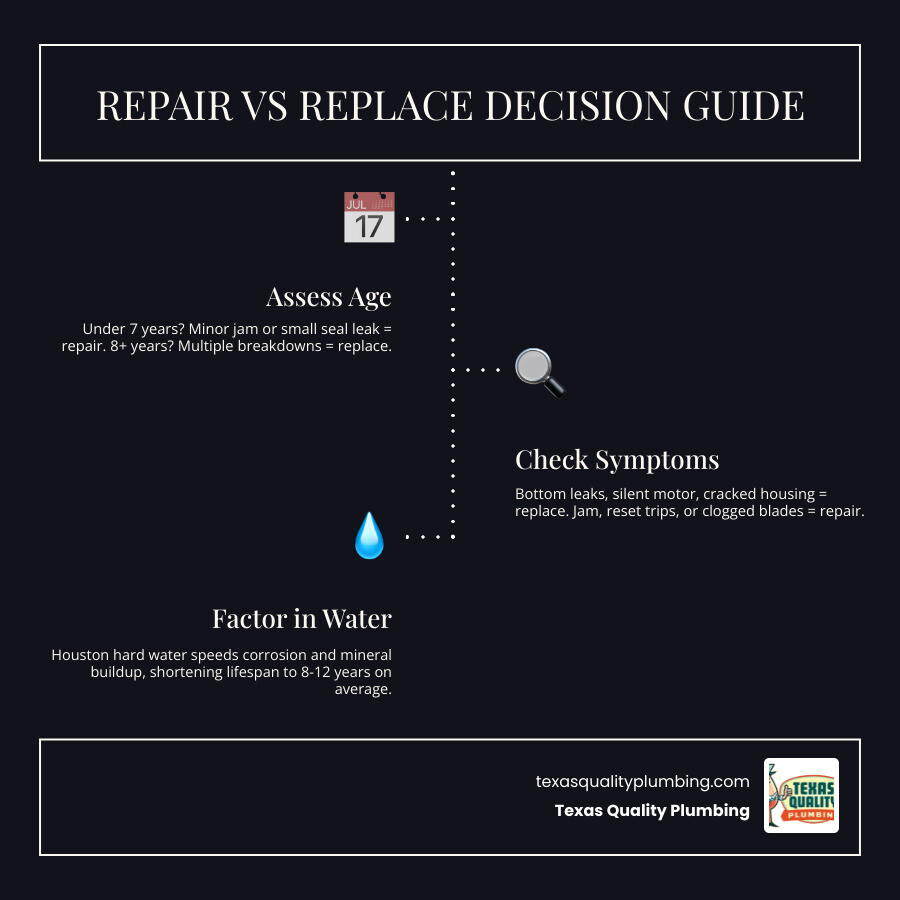
- Repair if your unit is under 7 years old and the problem is minor — a jam, a tripped reset button, or a small seal leak.
- Replace if your unit is 8 years or older, leaks from the bottom, has a burned-out motor, or has needed multiple repairs in the past year.
| Situation | Recommended Action |
|---|---|
| Unit under 7 years old, minor jam or clog | Repair |
| Unit under 7 years old, small seal leak | Repair |
| Unit 7-10+ years old, repeated breakdowns | Replace |
| Leaking from the bottom housing | Replace |
| Motor hums but won’t spin, jam cleared | Repair |
| Motor is completely silent after reset | Replace |
| Cracked or corroded housing | Replace |
| Persistent foul odor after cleaning | Replace |
Most Houston homeowners don’t think about the garbage disposal until it stops working mid-meal prep. Then it becomes urgent fast. The good news is that not every disposal problem means buying a new unit. Many issues — jams, clogs, minor leaks — are quick fixes. But some problems signal that a repair is just delaying the inevitable, and continuing to patch an aging unit ends up costing more in the long run.
This guide walks you through exactly how to tell the difference, what warning signs matter most, and how Houston’s hard water plays a role in how long your disposal actually lasts.
Understanding Garbage Disposal Lifespan and Houston Hard Water
On average, a typical household garbage disposal is built to last between 8 and 12 years. If you are exceptionally meticulous about what you put down your drain and perform routine maintenance, your unit might push past the 15-year mark. However, as we cross into June 2026, modern appliance standards and heavy daily use mean most units start showing their age around the decade mark.
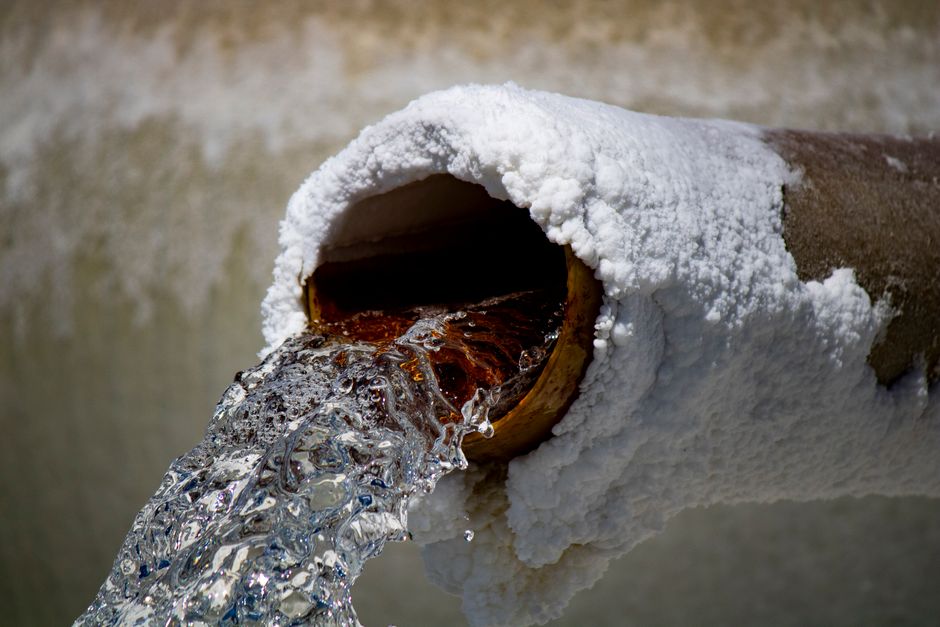
In Greater Houston, we have an additional variable to contend with: hard water. Houston’s water supply contains elevated levels of dissolved minerals, primarily calcium carbonate. Over time, as hard water flows through your kitchen sink, these minerals precipitate out and form crusty deposits inside your plumbing fixtures.
Inside a garbage disposal, this mineral buildup can cause several headaches:
- Seal Deterioration: Mineral deposits collect around the internal rubber seals, drying them out and causing them to crack prematurely.
- Blade and Impeller Friction: Calcium buildup inside the grinding chamber can coat the spinning impellers, making it harder for them to move freely and putting extra strain on the motor.
- Corrosion: The combination of food acids and mineral deposits can accelerate rust on the grinding ring and the outer housing.
If you notice white, chalky residue around your sink flange or notice that your unit is starting to struggle with everyday scraps, you might be seeing the early Signs Garbage Disposal is About to Fail. When evaluating your options, understanding your household’s demands and water quality is the first step in Choosing Kitchen Garbage Disposal Houston residents can rely on for the long haul.
Garbage Disposal Repair vs Replacement When to Decide
Deciding whether to call for a quick fix or invest in a brand-new unit comes down to a balance of age, symptom severity, and long-term value. Homeowners often fall into the trap of repeatedly repairing a dying appliance. While a quick fix might get you through the week, paying for multiple service visits on an old unit quickly adds up to more than the cost of a seamless replacement.
To help you navigate this crossroads, we use a simple economic threshold: if the cost of repairing your current unit is approaching half the price of a brand-new, more efficient model—and your disposal is already past its seventh birthday—it is almost always smarter to replace it.
| Problem Type | Repair It If… | Replace It If… |
|---|---|---|
| Jams & Clogs | It happens occasionally due to a stray bone or thick food scrap. | The unit jams constantly during normal, light use. |
| Leaks | The leak is at the top sink flange or the dishwasher connection. | Water is dripping directly out of the bottom electrical cover. |
| Noises | A loose screw or foreign object is rattling inside the chamber. | The motor makes a screeching metal-on-metal sound due to worn bearings. |
| Power Issues | The reset button was tripped or a GFCI outlet needs to be reset. | The motor is completely dead, smells like electrical burning, or repeatedly trips your breaker. |
How Age and Problem Type Help You with Garbage Disposal Repair vs Replacement When to Decide
The specific symptoms your disposal exhibits are excellent indicators of its internal health. Minor issues, such as a simple jam caused by an overzealous toss of potato peels, can usually be resolved in a few minutes. You can often clear these by inserting an Allen wrench into the bottom of the unit to manually turn the motor shaft and free the obstruction.
Similarly, loose mounting bolts or worn-out plumber’s putty around the sink flange are straightforward, inexpensive fixes. However, if you find yourself constantly dealing with a unit that stops mid-cycle, you should look into Why Garbage Disposal Keeps Jamming.
On the other hand, serious mechanical failures like a cracked plastic housing or a burned-out motor cannot be repaired. If your kitchen sink is backed up and sluggish, it could be a simple drain clog, or it could be a sign of a failing motor that no longer has the power to pulverize waste. For help diagnosing these slow-moving drains, check out our guide on Fixing Slow Draining Garbage Disposals.
Why Professional Diagnosis Matters for Garbage Disposal Repair vs Replacement When to Decide
Because a garbage disposal sits at the literal intersection of your home’s electrical system and its wastewater plumbing, DIY repairs carry inherent safety risks. Water and electricity are a dangerous combination. Attempting to rewire a unit, replace internal seals, or disassemble the motor housing without professional training can lead to electrical shocks, water damage under your cabinets, or personal injury.
A professional plumber does not just look at the disposal; we evaluate the entire system. We inspect the electrical connections, the integrity of the drain lines, and the structural support under your sink. This comprehensive evaluation ensures you don’t replace a perfectly good disposal when the real culprit is a faulty wall switch or a clogged P-trap.
Before you make a final decision, it helps to understand the value of having a licensed technician look at your system. Read more about why homeowners trust Professionals for Garbage Disposal Repair and learn exactly When to Contact Garbage Disposal Repair to save yourself time, stress, and potential water damage.
Key Warning Signs Your Disposal is Beyond Repair
If your garbage disposal is exhibiting any of the following warning signs, it has likely reached the end of its operational life:
- Water Leaking from the Bottom Housing: This is the ultimate red card for a garbage disposal. If you see water dripping from the very bottom of the unit (where the reset button and electrical wires are located), the internal motor shaft seal has failed. Water is now traveling directly through the electrical motor. This cannot be safely repaired and requires immediate replacement.
- A Silent Motor That Refuses to Reset: If you flip the switch and hear absolutely nothing—no hum, no buzz—and you have already pressed the red reset button on the bottom and verified that the outlet has power, the motor or its internal circuitry has failed.
- Frequent Manual Resets: If you have to crawl under your sink to press the red reset button every few days, the motor is overheating and drawing too much current. It is tired, weak, and on its way out.
- Loud, Screeching Metal-on-Metal Grinding: While some noise is normal, a sudden, deafening screech usually means the motor bearings are shot or the grinding components have disintegrated. If you want to know what those bizarre sounds mean, explore our resource on Strange Noises from Garbage Disposal and find out Why Garbage Disposal Makes Noises.
- Persistent Foul Odors: Over years of use, food waste can seep into microscopic cracks in plastic grinding chambers. If no amount of baking soda, vinegar, or citrus peels can cure the stench, the housing itself may be compromised. For a temporary fix, you can try these Fixes for Garbage Disposal Odors, but a persistent smell often points to the need for a fresh, clean, modern unit.
Frequently Asked Questions
Can a leaking garbage disposal be repaired?
It depends entirely on where the leak is originating. If the leak is coming from the top of the unit—where the disposal connects to the sink drain—it is usually a simple matter of replacing the worn-out plumber’s putty or tightening the mounting flange bolts. Leaks coming from the dishwasher bypass connection or the side discharge pipe can also be repaired by replacing the rubber gaskets or tightening the hose clamps.
However, if water is dripping from the bottom of the plastic outer shell or through the electrical reset button hole, the internal seals have failed, allowing water to enter the motor housing. In this scenario, the unit is a safety hazard and must be replaced. To help pinpoint the exact source of your leak, take a look at our checklist of Signs Garbage Disposal Needs Repair.
What foods cause the most damage to garbage disposals?
Your garbage disposal is not a trash can. Certain food items are notorious for causing immediate jams or long-term motor wear. Liquid fats, oils, and grease should never go down the drain; they solidify in your pipes and trap other food particles. Fibrous vegetables like celery, corn husks, onion skins, and artichokes act like stringy nets, wrapping around the spinning impellers and seizing the motor.
Starchy items like pasta, rice, and potato peels swell in water, creating a thick paste that clogs the drain lines. Finally, hard items like bones, peach pits, and coffee grounds can dull the grinding blades and chip the internal components. To keep your system running smoothly, make sure you avoid these common Food That Damage Garbage Disposals.
How do I choose the right horsepower for a replacement disposal?
Choosing the right motor size (horsepower or HP) ensures your disposal can handle your household’s cooking habits without constantly stalling:
- 1/3 HP to 1/2 HP: Best for small households of 1 to 2 people who only use the disposal occasionally for light, soft foods.
- 3/4 HP: The sweet spot for average families of 3 to 5 people. These motors can handle tougher waste, run much quieter, and rarely jam.
- 1 HP and Above: Ideal for large families, heavy home cooks, or those who want the ultimate grinding power for fibrous scraps and small bones.
Selecting the right size prevents premature wear on your plumbing system. You can learn more about finding the perfect model for your kitchen layout by browsing our dedicated page on Garbage Disposals.
Conclusion
Deciding on garbage disposal repair vs replacement when to decide doesn’t have to be a guessing game. By looking at your unit’s age, checking for critical warning signs like bottom leaks, and understanding how Houston’s hard water affects your appliances, you can make an informed, cost-effective choice for your kitchen.
At Texas Quality Plumbing, we are dedicated to keeping your home running smoothly. Serving Greater Houston—including Pasadena, Jersey Village, Humble, Katy, and the surrounding communities—our team of licensed, professional plumbers is always ready to provide fast, reliable workmanship. Whether you need a quick repair to clear a stubborn jam or a professional installation of a quiet, high-efficiency replacement, we guarantee exceptional, worry-free service.
Don’t let a broken disposal disrupt your daily routine. If you are located in the surrounding areas, check out our specialized local services for Garbage Disposal Repair in Pasadena or Garbage Disposal Repair in Jersey Village. Ready to get your kitchen back in perfect working order? Contact us today to schedule your service or explore our complete Texas Quality Plumbing Garbage Disposal Services.