

Is Your Garbage Disposal Trying to Tell You Something?
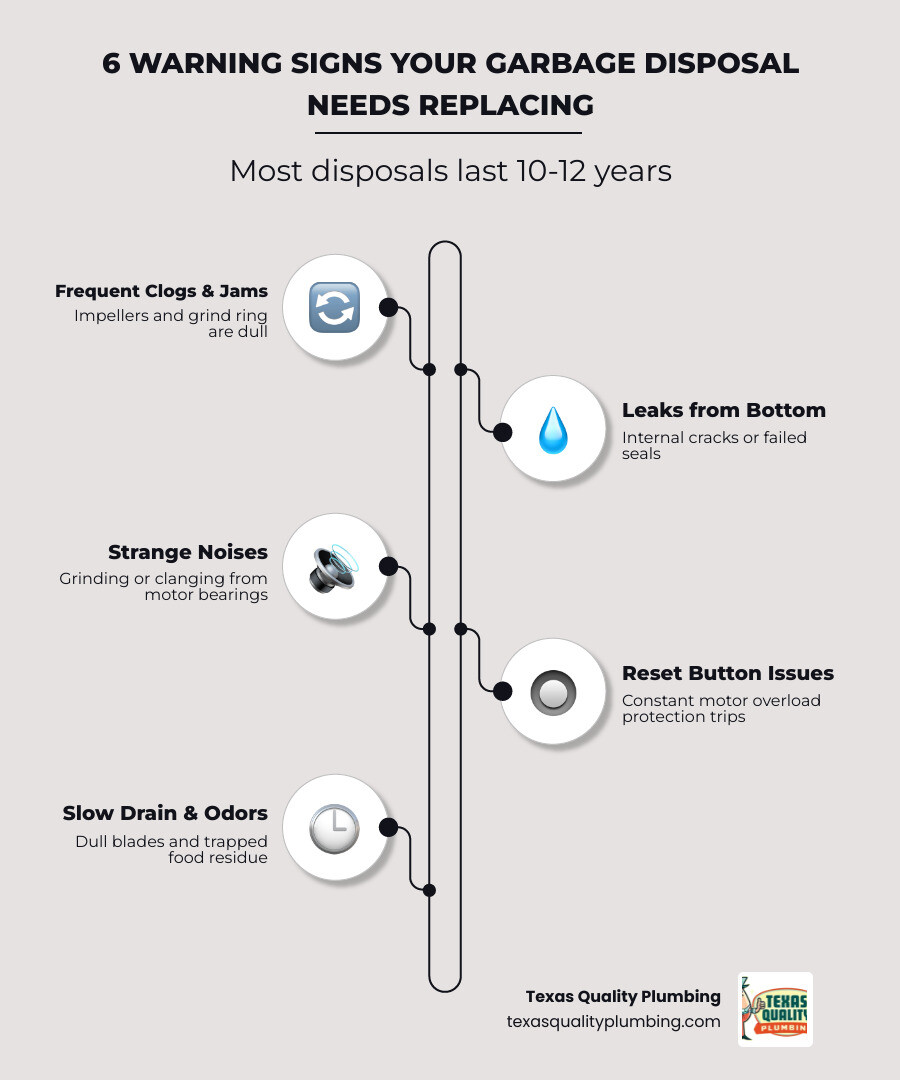
If you’re wondering how to know when your garbage disposal needs replacing, here are the most common signs to watch for:
- Frequent clogs or jams that keep coming back even after clearing
- Leaks from the bottom of the unit, which usually mean internal cracks
- Strange grinding or clanging noises during operation
- Constantly pressing the reset button to keep it running
- Slow draining and poor grinding performance
- Persistent bad odors that survive cleaning attempts
- Age over 10 years, especially combined with any of the above
Most garbage disposals last between 10 and 12 years, according to the International Association of Certified Home Inspectors (InterNACHI). And since more than 60% of homeowners inherited their disposal when they moved in, there’s a good chance yours may already be nearing the end of its lifespan — without you even realizing it.
For Houston homeowners with busy schedules, a failing disposal is more than just an inconvenience. It can quietly cause water damage, drain backups, and bigger plumbing headaches if left unchecked. The good news is that the warning signs are usually pretty clear once you know what to look for.
How to know when your garbage disposal needs replacing vocab explained:
How to Know When Your Garbage Disposal Needs Replacing: 6 Warning Signs
Your garbage disposal is one of the hardest-working appliances in your kitchen, quietly grinding away food waste to keep your sink clean and fresh. But like any mechanical device, it won’t last forever. Over time, the constant exposure to water, food acids, and mechanical friction takes its toll.
When your disposal begins to wear out, it will rarely fail silently. Instead, it will give you several physical and operational warning signs. Recognizing these signs early can save you from a sudden kitchen flood, ruined under-sink cabinetry, or a completely blocked sewer line. If you notice any of the following six symptoms, it is time to start looking at a replacement.
Paying attention to these warning signs can help you identify when the unit’s internal seals have failed or when the motor is on its last legs. For a deeper look at these early indicators, check out our guide on Signs Garbage Disposal Is About to Fail.
1. Frequent Clogs and Jams
Do you find yourself reaching for the flashlight and the hex wrench every other day to clear out yet another jam? While an occasional jam is normal — usually caused by someone accidentally dropping a stray bottle cap or a large fruit pit down the drain — frequent clogs during normal use are a major red flag.
Garbage disposals do not actually use sharp, spinning knife blades to cut up food. Instead, they rely on blunt impellers (or swiveling metal keys) mounted on a spinning plate. These impellers spin at high speeds, forcing food waste outward against a stationary, textured grind ring that pulverizes the food into tiny particles.
As the disposal ages, these impellers and the grind ring wear down and lose their efficiency. When the components become dull, they can no longer break food down into a fine slurry. Instead, large chunks of food pass into your drain lines, leading to immediate blockages in your P-trap or main sewer pipe. If your unit struggles to process basic soft foods without stopping, you can read more about Why Garbage Disposal Keeps Jamming to understand if it is a simple fix or a sign of terminal wear.
2. Persistent Leaks from the Bottom of the Unit
If you open your cabinet doors to grab some dish soap and notice a puddle of water, you need to act fast. While some leaks occur at the top flange or the dishwasher connection (which are often repairable), a leak coming directly from the bottom of the garbage disposal housing is a different story.
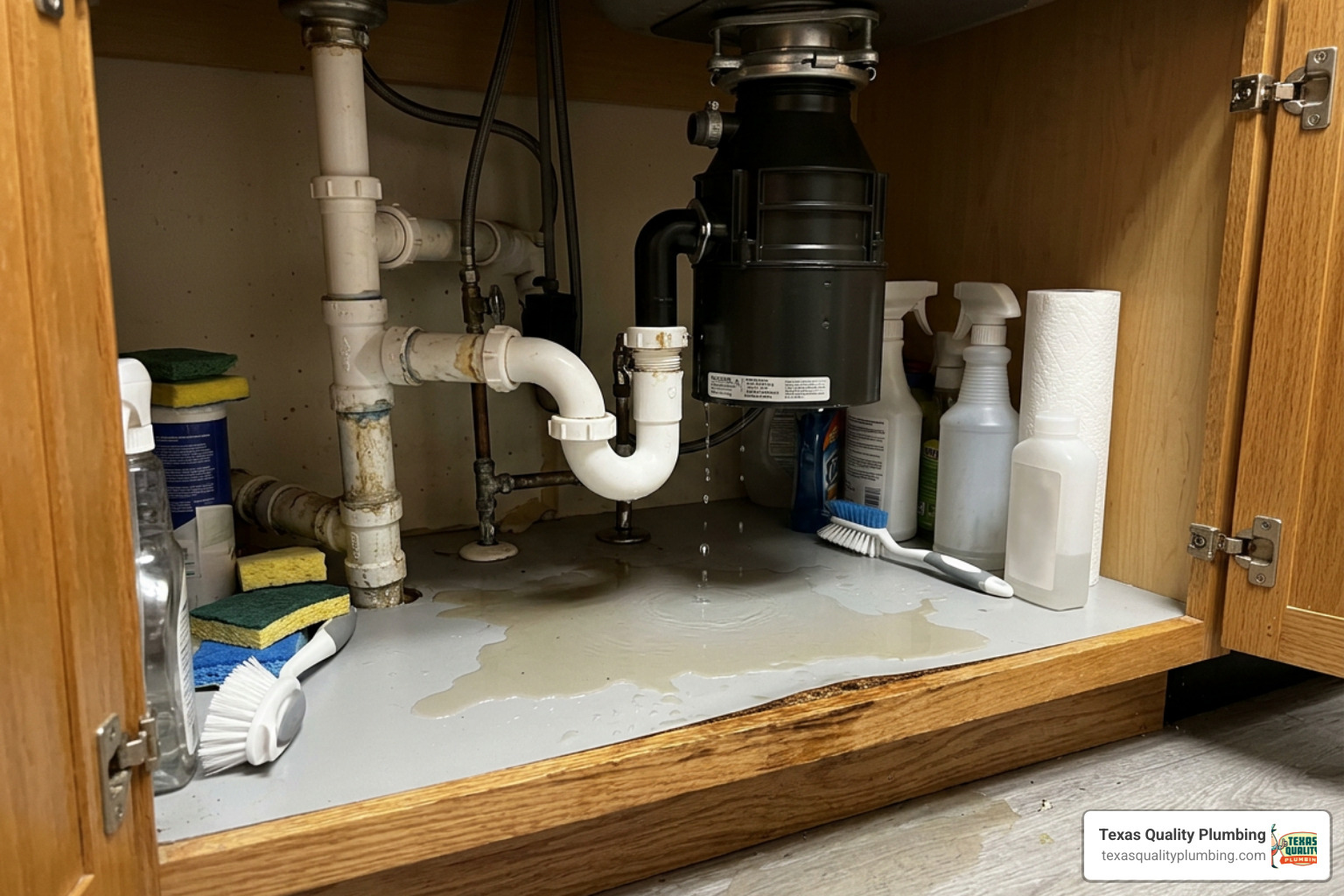
Leaks from the bottom of the unit almost always indicate that the internal seals have failed. These seals are designed to keep water inside the grinding chamber and away from the electrical motor components directly below it. When these seals dry out, crack, or rot, water begins to drip through the motor housing and exit through the bottom vents or near the reset button.
Once water penetrates the motor chamber, the disposal is a safety hazard. Not only can this cause the motor to short out and trip your circuit breaker, but it also creates a risk of electrical shock. Because internal seals cannot be easily or cost-effectively replaced, a bottom leak is a definitive sign that you need a brand-new unit. Ignoring this issue can quickly lead to wood rot, mold growth, and ruined cabinets. Learn more about identifying these structural issues in our overview of Signs Garbage Disposal Problems.
3. Strange, Loud Noises During Operation
While no garbage disposal is completely silent, you should be familiar with the normal, steady hum of your kitchen companion. If your disposal suddenly starts making loud screeching, metal-on-metal grinding, or rattling noises, something is seriously wrong.
First, always turn off the power and check for any foreign metal objects (like spoons, coins, or twist ties) that may have fallen into the chamber. If the chamber is completely clear but the terrifying noise persists, the internal bearings are likely shot.
The motor bearings allow the impeller plate to spin smoothly at thousands of rotations per minute. Over time, water intrusion or simple mechanical wear will cause these bearings to seize or disintegrate. When this happens, the motor has to work twice as hard, creating a loud screeching or grinding sound. Because these bearings are sealed inside the motor assembly, they cannot be repaired. To help diagnose these sounds, read our article on Strange Noises from Garbage Disposal.
4. Constant Need to Press the Reset Button
On the bottom or lower back of every garbage disposal, you will find a small red button. This is the built-in circuit breaker. It is designed to pop out and shut off the electrical power if the motor gets clogged, overheats, or experiences an electrical overload. This safety feature prevents the motor from burning out or starting an electrical fire.
Having to press this button once a year because someone overloaded the unit with potato peels is perfectly normal. However, if you find yourself crawling under the sink to reset the disposal every single week — or even multiple times during a single dishwashing session — the motor is failing.
As motors age, their electrical windings degrade, causing them to draw too much current and overheat under minimal workloads. When the motor becomes too weak to spin the impellers through normal food waste, it trips its internal breaker constantly. If your unit is struggling to stay powered on, check out the common culprits detailed in Signs Garbage Disposal Needs Repair.
5. Slow Draining and Inefficient Grinding
Does it feel like your garbage disposal takes an eternity to grind up basic food scraps? A healthy, modern disposal should process a reasonable amount of food waste in just a few seconds. If you have to keep the water running and the disposal humming for several minutes just to clear out a handful of soft leftovers, the unit has lost its grinding power.
This slow grinding is usually caused by worn-out impellers. Over years of use, the grinding components lose their sharp edges and structural integrity, especially if they have been subjected to hard water or abrasive materials.
When the food is not ground up quickly, it sits in the chamber, blocking the flow of water and causing your sink to drain incredibly slowly. If you are experiencing this frustrating lag, you can explore the steps for Fixing Slow Draining Garbage Disposals to see if a simple line cleaning will help, or if the disposal itself is simply too weak to continue.
6. Lingering Odors That Won’t Go Away
It is normal for a garbage disposal to get a bit smelly from time to time. Food particles can sometimes get trapped on the splash guard or around the upper rim. Usually, a quick flush with baking soda, vinegar, or some citrus peels will neutralize the odor and leave your sink smelling fresh.
However, if you have scrubbed, bleached, and deodorized your disposal repeatedly, yet a persistent, foul smell of decaying food continues to waft out of your sink, the unit may be deteriorating internally.
Over years of exposure to food acids and moisture, the plastic housing of older disposals can develop tiny, microscopic cracks and pits. Additionally, the rubber gaskets and seals can degrade, creating porous surfaces where food particles, grease, and bacteria can lodge themselves permanently. Once bacteria colonize these unreachable internal crevices, no amount of surface cleaning will eliminate the smell. To keep your system clean and avoid this issue, make sure you are familiar with the 6 Foods You Should Never Put in Your Garbage Disposal.
Repair vs. Replacement: Making the Right Decision
When your garbage disposal starts acting up, you have to make a choice: do you try to fix it, or is it smarter to replace it entirely?
Because garbage disposals are relatively compact, high-wear appliances, repairs are often only temporary fixes for deeper mechanical issues. To help you weigh your options, we have put together a quick comparison table of the key factors to consider:
| Symptom / Factor | When to Choose Repair | When to Choose Replacement |
|---|---|---|
| Age of the Unit | Under 5 years old | 8 to 12+ years old |
| Leak Location | Top plumbing connections / loose seals | Bottom of the unit / motor housing |
| Grinding Speed | Normal, but jammed by a foreign object | Constantly slow, dull impellers |
| Power Issues | Tripped breaker or simple jam | Motor hums but won’t spin; frequent resets |
| Odors | Resolved with natural cleaning agents | Persistent, deep-seated smell of decay |
| Frequency of Issues | First-time or rare occurrence | Recurring problems every few weeks |
If you are still on the fence about whether your unit is worth saving, you can read more about When to Contact Garbage Disposal Repair to get a clearer picture of your disposal’s condition.
When to Choose Repair
Repairing your garbage disposal is often the best route if the unit is relatively new (under five years old) and the problem is sudden and isolated.
For example, if the disposal is completely silent because a stray spoon jammed the impellers, this is a simple mechanical fix. You can easily clear the jam by inserting a hex wrench into the bottom of the unit and manually turning it to free the plate. Similarly, if the leak is coming from a loose sink flange gasket or a loose slip-joint nut on your drain pipe, a plumber can quickly replace the gasket or tighten the connection. If you live in the Pasadena area and need a quick professional assessment, our team can help with Garbage Disposal Repair in Pasadena.
How to Know When Your Garbage Disposal Needs Replacing Instead of Repair
Replacement is almost always the smarter, more cost-effective long-term decision if your disposal is over eight years old or is experiencing motor failure.
Trying to repair a burned-out motor or fix a cracked internal housing is highly impractical. The cost of labor and specialized replacement parts for these internal components will often equal or exceed the cost of buying and installing a brand-new, modern unit that comes with a fresh manufacturer’s warranty. If your disposal is showing signs of terminal wear, it is best to consult with Professionals for Garbage Disposal Repair to discuss your replacement options.
How to Extend the Lifespan of Your Garbage Disposal
Once you invest in a new garbage disposal, you will want to make sure it lasts as long as possible. With proper care and a few simple habits, you can easily push your disposal’s lifespan past the 12-year mark.
Here are the best maintenance habits to adopt:
- Always Run Cold Water: Always turn on a strong stream of cold water before you turn on the disposal, and keep it running for about 10 to 15 seconds after you turn the unit off. Cold water is crucial because it solidifies any fats or grease in the food waste, allowing the impellers to chop them up. Hot water liquefies grease, which then coats your pipes and leads to major clogs.
- Feed Food Scraps Slowly: Do not shove a large plate of leftovers down the drain all at once. Feed food waste into the disposal gradually in small batches to avoid overloading the motor.
- Avoid Harsh Chemicals: Never pour chemical drain cleaners down your disposal. These harsh chemicals are highly corrosive and can eat away at the plastic and rubber seals inside the unit, causing premature leaks.
- Clean It Naturally: Every two weeks, drop a handful of ice cubes and some coarse salt down the disposal, then run it with cold water. The ice and salt will safely scrub the impellers and grind ring clean. Follow this up with a sliced lemon or lime to deodorize the chamber.
- Know What to Keep Out: The easiest way to ruin a disposal is by treating it like a trash can. To protect your investment, make sure you review our comprehensive list of Food That Damage Garbage Disposals.
Choosing the Right Replacement Unit for Your Houston Home
If you have decided that it is time for a replacement, you might be overwhelmed by the sheer variety of options available on the market today. Choosing the right unit depends on your household size, your cooking habits, and your kitchen configuration. For a complete guide on making the right choice, check out our resource on Choosing Kitchen Garbage Disposal Houston.
Sizing Your Disposal’s Horsepower
The horsepower (HP) rating of a garbage disposal motor determines how much food waste it can handle and how finely it can grind it.
- 1/3 HP Motors: These are entry-level, compact models. They are best suited for single-person apartments, vacation homes, or light, occasional use. They struggle with tough or fibrous foods.
- 1/2 HP Motors: This is the standard size for small households of one to two people. They are adequate for everyday soft food scraps but require you to feed food waste slowly.
- 3/4 HP Motors: This is the “sweet spot” for most average-sized families (three to four people). A 3/4 HP motor has plenty of power to grind tougher scraps like small bones, fibrous vegetables, and cooked meats without jamming. They also tend to run much quieter than smaller models because they do not struggle under load.
- 1 HP Motors: If you love to cook, have a large family (five or more people), or entertain frequently, a 1 HP model is your best bet. These heavy-duty machines can pulverize almost any food waste with ease and are highly resistant to jams.
Key Features to Look For
When shopping for a new unit, look for these premium features that offer better durability and convenience:
- Stainless Steel Components: Cheap disposals use galvanized steel grinding components, which will rust and corrode over time when exposed to Houston’s water. Opt for a model with stainless steel impellers, grind rings, and turn tables for maximum corrosion resistance and longevity.
- Noise Insulation: High-end models feature sound-dampening insulation around the motor housing, making them significantly quieter during operation.
- Anti-Jam Technology: Some modern disposals feature auto-reversing motors that automatically spin in the opposite direction if a jam is detected, clearing the blockage without manual intervention.
Frequently Asked Questions About Garbage Disposal Replacement
How long does a garbage disposal typically last?
On average, a residential garbage disposal will last between 10 and 12 years. High-quality units featuring stainless steel components can last up to 15 years with proper maintenance, while cheaper, light-duty models may begin to fail after just 5 to 8 years. Your usage habits, water quality, and maintenance routine will heavily influence the exact lifespan of your unit.
Can I replace a garbage disposal myself or should I call a plumber?
While a straight, same-mount swap can be handled by a handy DIYer in about an hour, hiring a professional plumber is highly recommended for most homeowners. A professional ensures that the sink flange is sealed perfectly with plumber’s putty to prevent future leaks, the dishwasher knockout plug is properly removed, and all plumbing and electrical connections comply with local building codes. If you live in the Jersey Village area, you can learn more about our local services by visiting Garbage Disposal Repair in Jersey Village.
What are the risks of ignoring how to know when your garbage disposal needs replacing?
Continuing to use a failing garbage disposal can lead to serious consequences. Bottom leaks can cause quiet, unseen water damage to your kitchen cabinets, leading to wood rot and hazardous black mold growth. Additionally, a disposal that can no longer grind food finely will send large debris down your drain line, resulting in severe sewer line clogs that are costly to clear. Finally, a failing motor can short-circuit, creating potential electrical fire hazards in your kitchen.
Conclusion
A reliable garbage disposal is an essential component of a clean, efficient modern kitchen. Knowing how to know when your garbage disposal needs replacing allows you to take control of your kitchen’s plumbing health before a minor leak becomes a major flood. If your disposal is over a decade old, constantly jamming, leaking from the bottom, or making terrible noises, it is time to upgrade.
At Texas Quality Plumbing, we have been helping homeowners throughout Greater Houston find the perfect plumbing solutions since 2003. Whether you need a quick repair or a professional installation of a durable, high-performance new unit, our licensed plumbers are ready to deliver fast, clean, and dependable service.
If you are ready to upgrade your kitchen or need an expert to inspect your current system, explore our professional services for Garbage Disposals and schedule your appointment today!