

Why Understanding How Tree Roots Destroy Your Drain and Sewer Lines Could Save You Thousands
How tree roots destroy your drain and sewer lines is one of the most common — and costly — plumbing problems Houston homeowners face. Here’s a quick breakdown of how it happens:
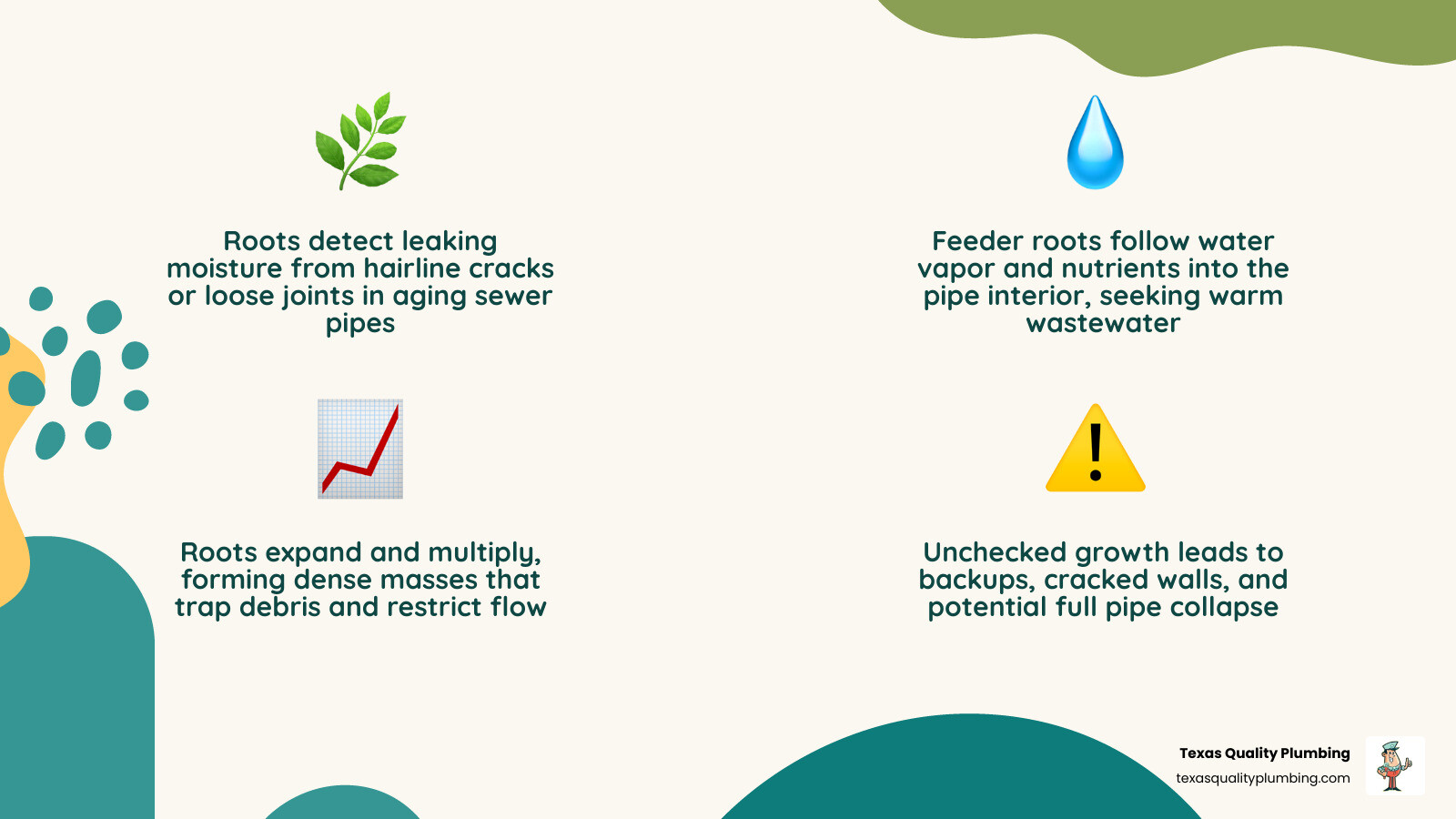
- Roots detect moisture leaking from tiny cracks or loose joints in buried pipes
- Feeder roots enter through those gaps, drawn by warm water vapor, oxygen, and nutrients in wastewater
- Roots grow and expand inside the pipe, creating dense root masses that snag grease and debris
- Flow gets restricted, leading to slow drains, gurgling toilets, and sewage backups
- Structural damage follows — cracked walls, joint separation, and in serious cases, full pipe collapse
Most homeowners don’t realize there’s a problem until a drain stops working entirely. By then, roots may have been growing inside the pipe for months or even years. Research shows roots cause more than 50% of all sewer blockages, and in older Houston homes with clay or cast iron pipes, the risk is even higher. Houston’s expansive clay soil shifts with wet and dry cycles, which puts extra stress on already aging pipe joints — making them easier for roots to invade.
The good news? If you catch it early and take the right steps, you can stop root damage before it turns into a full sewer line replacement.
Step 1: Learn how tree roots destroy your drain and sewer lines before symptoms start
To protect your home in areas like Cypress or The Woodlands, you first have to understand the “why” behind root intrusion. Trees aren’t malicious, but they are incredibly efficient at finding what they need to survive: water, oxygen, and nutrients. Your sewer line is essentially a 24/7 buffet for a thirsty tree.
Root intrusion usually begins at the most vulnerable points of your plumbing: hairline cracks and loose joints. Even if your pipes seem solid, aging infrastructure often develops tiny defects. As warm wastewater flows through your pipes, it releases water vapor into the surrounding soil. Tree roots sense this moisture and follow the vapor trail directly to the source.
How tree roots destroy your drain and sewer lines by following moisture, oxygen, and nutrients
Think of tree roots as the ultimate moisture-seeking missiles. They primarily grow horizontally in the top 12 to 24 inches of soil, spreading out far beyond the tree’s canopy—sometimes up to 2.5 to 7 times the tree’s height! When they encounter a sewer pipe, they don’t just “hit” it; they explore it.
Feeder roots, which are as thin as a strand of hair, can slip into the microscopic gaps of a pipe joint or a small corrosion crack. Once inside, they find a perfect “greenhouse” environment. The pipe provides a constant supply of warm water and nutrient-rich waste. During Houston dry spells, when the topsoil is parched, these roots will dive deeper and push harder into your sewer lateral to keep the tree hydrated.
Why older and damaged pipes are easiest for roots to invade
Not all pipes are created equal. If you live in an older home in Houston or Pasadena built before the 1970s, your sewer lines are likely made of clay tile, cast iron, or even Orangeburg (tar paper) pipe.
- Clay Pipes: These were installed in sections with joints every few feet. Over time, these joints loosen, providing an easy entry point for roots.
- Cast Iron: While sturdy, cast iron eventually corrodes. This creates rough patches and holes that roots easily exploit.
- PVC Pipes: Modern PVC is much more resistant because it has fewer joints and is usually sealed more tightly. However, poor installation or shifting soil can still cause cracks.
In our region, the expansive clay soil is a major player. As the soil expands when wet and shrinks when dry, it physically moves your pipes. This movement causes joints to separate and creates “offset” joints, leaving the door wide open for root invasion.

Step 2: Spot the early warning signs of root intrusion fast
The trick to avoiding a massive repair bill is catching the roots while they are still “hair” and before they become “logs.” Because your sewer line is buried several feet underground, you have to look for indirect clues.
If you notice that your drains are acting sluggish or you hear a strange “glug-glug” sound from the toilet after you flush, don’t ignore it. These are often the first signs that something is obstructing the flow.
How tree roots destroy your drain and sewer lines from minor clogs to major backups
Once a few feeder roots get inside, they grow rapidly. As they increase in diameter, they act like a net. This root mass catches everything you send down the drain—toilet paper, grease, hair, and “flushable” wipes.
Initially, this just causes a slow drain. But as the mass grows, it creates a total blockage. This is when the real trouble starts: sewage backups. If you start seeing water come up through your basement floor drain or your lowest shower stall, the roots have likely taken over. You can learn more about these specific red flags in our guide on Root Intrusion Signs in Sewer Lines and check for other Signs of Hidden Sewer Line Problems to stay ahead of the curve.
Yard and foundation clues that suggest a damaged sewer line
Sometimes the signs aren’t in your sink, but in your yard. Keep an eye out for:
- Lush, Green Patches: If one area of your lawn is significantly greener and grows faster than the rest, it might be getting “fertilized” by a leaking sewer pipe.
- Soggy Spots: Unexplained wet patches in the yard during dry weather often indicate a pipe break caused by root expansion.
- Sinkholes or Depressions: As roots grow and pipes break, soil can wash into the sewer line, creating a void underground that eventually collapses.
- Foul Odors: A persistent smell of rotten eggs near your foundation or in the yard is a clear sign of a sewer leak.
Step 3: Confirm the problem with the right inspection and diagnosis
Don’t start digging up your yard based on a guess! Modern plumbing technology allows us to see exactly what’s happening without the guesswork. If you suspect roots, the first step should always be a professional diagnostic.
Why a sewer camera inspection matters before choosing a fix
At Texas Quality Plumbing, we use high-definition waterproof cameras attached to a flexible cable. We thread this through your sewer line to get a “root’s-eye view” of the interior.
This Sewer Camera Inspection is vital because it tells us:
- The exact location of the root intrusion.
- The extent of the damage (Is it just a few roots, or is the pipe collapsed?).
- The pipe material, which dictates how we can clean or repair it.
- If there are other issues, like offset joints or “bellies” (sagging sections) in the line.
Without this, you might pay for a cleaning service that only clears a small hole through the roots, leading to another clog just weeks later. Identifying Tree Root Intrusions accurately is the only way to ensure a long-term fix.
When homeowners should stop DIY efforts and call a plumber
We love a good DIY project as much as anyone, but sewer lines are where we suggest drawing the line. Store-bought chemical drain cleaners are often caustic and can actually damage older metal pipes, making the root problem worse by creating more leaks.
If you’ve tried snaking the drain yourself and the clog returns within a few days, or if multiple fixtures are backing up at once, it’s time to call in the pros. Persistent sewage smells or structural cracks in your foundation are also “emergency” signs that require immediate expert attention.
Step 4: Use the right short-term fix and long-term repair
Once we’ve confirmed how tree roots destroy your drain and sewer lines in your specific Case, we have to decide on a treatment plan. This usually involves a two-pronged approach: removing the current blockage and preventing the roots from growing back.
Best short-term options for removing roots already inside the pipe
If your sewer is backed up right now, we need to restore flow immediately.
- Mechanical Cutting: We use a heavy-duty plumbing snake with rotating blades (a root saw) to physically cut the roots out of the pipe. This is effective but temporary, as the roots will grow back from the outside.
- Hydro Jetting: This is often the preferred method for stubborn clogs. We use high-pressure water (up to 4,000 PSI) to scour the inside of the pipe. It doesn’t just cut the roots; it blasts away the grease and debris they’ve trapped. You can read more about Hydro Jetting for Stubborn Clogs and How to Clear Clogged Sewer Line issues on our blog.
- Foaming Root Killers: After cleaning, we often recommend a foaming herbicide. The foam fills the entire pipe, killing the remaining root ends without harming the tree itself.
| Method | Effectiveness | Duration | Best For |
|---|---|---|---|
| Mechanical Auger | Good | Short-term (6-12 months) | Immediate relief of soft blockages |
| Hydro Jetting | Excellent | Mid-term (1-2 years) | Removing heavy root masses and grease |
| Foaming Killer | Great | Preventive | Stopping regrowth after cleaning |
Long-term repairs that help stop roots from coming back
Cleaning the roots is like mowing the lawn—they will grow back unless you seal the entry point.
- Pipe Lining (Trenchless): This is a fantastic “no-dig” solution. We insert an epoxy-saturated liner into the old pipe and inflate it. Once it cures, it creates a seamless, jointless “pipe-within-a-pipe” that roots cannot penetrate. It’s often much cheaper than traditional digging when you factor in the cost of replacing your driveway or landscaping.
- Pipe Bursting: Another trenchless method where we pull a new HDPE pipe through the old one, breaking the old pipe apart as the new one takes its place.
- Traditional Replacement: If the pipe has completely collapsed, we may need to excavate and replace the damaged section. This is usually a last resort for severe structural failure.
Step 5: Prevent future root damage with smarter landscaping and maintenance
Prevention is always easier (and cheaper) than repair. If you are planning a new garden in Sugar Land or Pearland, or if you just moved into a home with mature trees, take these steps to protect your plumbing.
Planting and yard planning tips that protect buried drain and sewer lines
The best way to avoid root trouble is to keep a “buffer zone.”
- Know Your Lines: Before planting, call 811 to have your utility lines marked.
- Distance Matters: Plant large trees at least 10 to 15 feet away from your sewer lateral.
- Choose Wisely: Avoid “water-seekers” like Willows, Poplars, Silver Maples, and even our beloved Houston Live Oaks near your pipes. Instead, opt for slow-growing species with non-aggressive root systems, like Flowering Dogwoods or Japanese Maples.
- Install Root Barriers: If you must plant near a line, install a physical root barrier. These are plastic or metal sheets buried vertically that redirect roots downward and away from your pipes.
Maintenance habits that reduce repeat root intrusion
If you know your home is prone to root issues, don’t wait for a backup.
- Annual Inspections: Schedule a camera inspection every 1-2 years. Catching a tiny root today prevents a flood tomorrow.
- Regular Cleaning: If you have older clay pipes, a preventative hydro jetting every couple of years can keep the lines clear.
- Fix Leaks Promptly: Roots follow the water. If you have a small leak in your sewer line, fix it before the trees find it.
- Watch Your Drains: Avoid pouring grease down the sink. Grease sticks to roots and speeds up the clogging process.
Frequently Asked Questions about how tree roots destroy your drain and sewer lines
Does homeowners insurance usually cover sewer line damage caused by tree roots?
This is a tricky one. In most cases, standard homeowners insurance does not cover damage caused by tree roots. Insurance is designed for “sudden and accidental” events (like a pipe freezing and bursting). Root intrusion is considered “gradual damage” and a maintenance issue.
However, some policies offer a “Service Line Coverage” endorsement. This is an add-on that specifically covers the repair of underground utility lines. We highly recommend checking with your agent in Houston to see if you have this coverage or can add it.
Can roots grow back after removal?
Yes, absolutely. Mechanical cutting and hydro jetting remove the roots inside the pipe, but the root system outside the pipe is still alive and well. Since the hole or crack in the pipe is still there, the roots will naturally find their way back in within 6 to 24 months. This is why chemical treatments or structural repairs (like lining) are necessary for a permanent solution.
How often should a sewer line be checked if roots were found before?
If we’ve cleared roots from your line but you haven’t opted for a permanent liner or replacement, we recommend a camera check-up every 12 to 18 months. In smaller-dimension pipes, roots can grow back fast enough to cause a total blockage in less than two years.
Conclusion
Understanding how tree roots destroy your drain and sewer lines is the first step toward protecting your home. From the way they sniff out moisture to the structural damage they cause by expanding inside your pipes, roots are a formidable opponent for any plumbing system.
But you don’t have to face them alone. Whether you’re in Humble, Katy, or right here in Houston, Texas Quality Plumbing is here to help. We provide expert leak detection, professional camera inspections, and advanced cleaning methods like hydro jetting to keep your home running smoothly.
Don’t wait for the “glug-glug” to become a “flood.” If you suspect root trouble, give us a call. We offer guaranteed 24-hour appointments to our VIP members and quick, efficient service to all our neighbors in the Greater Houston area.
Ready to clear your lines? Contact us for more info about our sewer services today!