

The Hidden Threat Beneath Your Houston Yard: How Tree Roots Invade Your Sewer Pipes in Texas Soil
How tree roots invade your sewer pipes in Texas soil is one of the most damaging — and most overlooked — plumbing problems facing Houston homeowners today. Your yard may look perfectly normal while, just a few feet underground, tree roots are quietly working their way into your sewer line through tiny cracks and loose joints.
Here is a quick answer to how it happens:
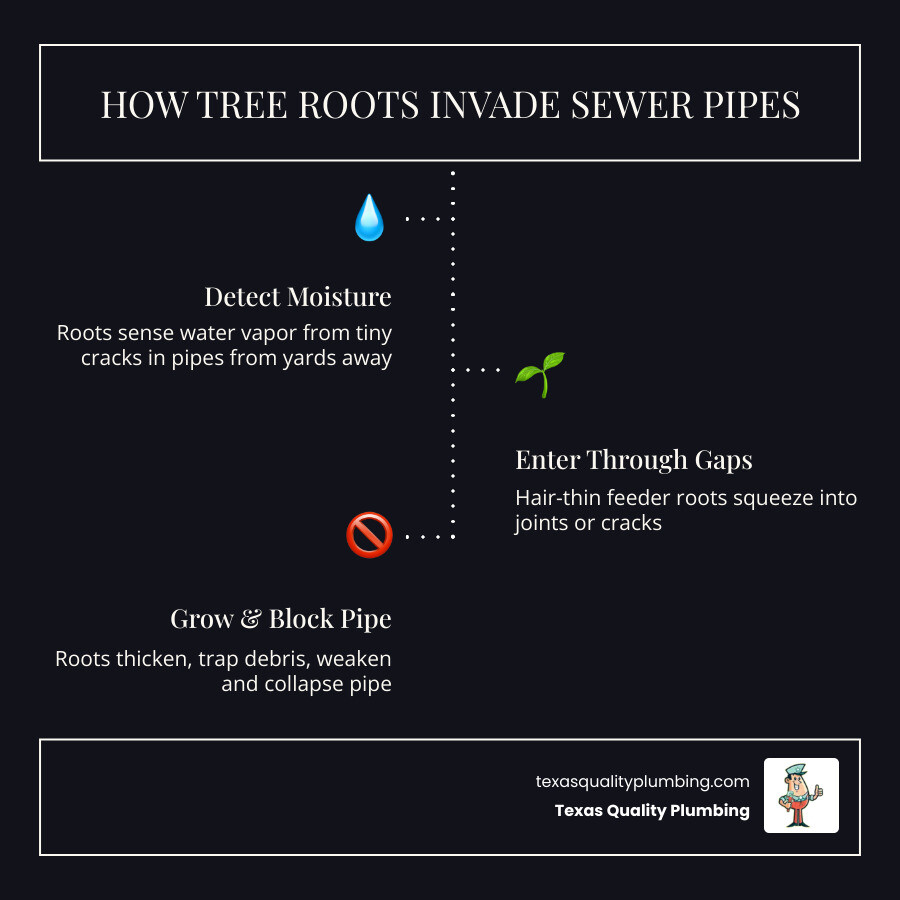
- Roots detect moisture — Even a microscopic crack in a sewer pipe releases water vapor into the surrounding soil. Tree roots can sense this from yards away.
- Hair-thin roots enter first — Fine feeder roots squeeze through the smallest gap in a pipe joint or crack.
- Roots expand inside the pipe — Once inside, roots grow toward the nutrient-rich wastewater, thickening over time.
- Debris starts collecting — The root mass traps grease, paper, and waste, building into a blockage.
- The pipe weakens or collapses — Continued root growth puts pressure on the pipe walls from the inside, eventually cracking or collapsing them entirely.
Texas conditions make this worse than almost anywhere else in the country. The state’s expansive clay soil shifts and cracks with every wet-dry cycle, opening new entry points for roots. Drought stress pushes trees to search aggressively for water — and your sewer line is a reliable source running year-round. Over 50% of sewer blockages nationwide are linked to root intrusion, and in Texas, tree roots account for roughly 30% of all septic and sewer problems.
If you have mature trees in your yard and a home built before 1986, the risk is even higher. Older cast iron and clay pipes common in Houston-area homes are brittle, corroded, and far easier for roots to penetrate than modern materials.
This guide walks you through exactly why this happens in Texas, which trees and homes face the greatest risk, what warning signs to watch for, and what actually fixes the problem for good.
Why Tree Roots Target Sewer Lines in Texas
Tree roots are not evil masterminds, but they are incredibly good at finding water. In Houston and surrounding areas, that matters a lot. Long hot stretches, sudden downpours, clay-heavy soils, and mature landscaping all create perfect conditions for roots to head straight for buried plumbing.
Sewer lines are attractive for three simple reasons:
- They release moisture vapor when joints loosen or pipes crack
- They carry nutrient-rich wastewater
- They stay more consistently damp than surrounding soil
A single tree can pull a huge amount of water from the ground each day, especially during heat and drought. That constant demand pushes root systems outward. And those systems can spread much farther than most homeowners expect. Research commonly shows roots can extend 2 to 7 times the height of the tree. So yes, that lovely shade tree can be interested in a sewer line much farther away than seems reasonable.
In parts of Greater Houston, soils range from expansive clays to sandy coastal blends. Both can contribute to trouble. Clay soils shrink during dry periods and swell when wet, stressing buried pipes. Sandy soils drain faster, which can encourage thirsty roots to keep searching for stable moisture sources like sewer trenches.
How tree roots invade your sewer pipes in texas soil
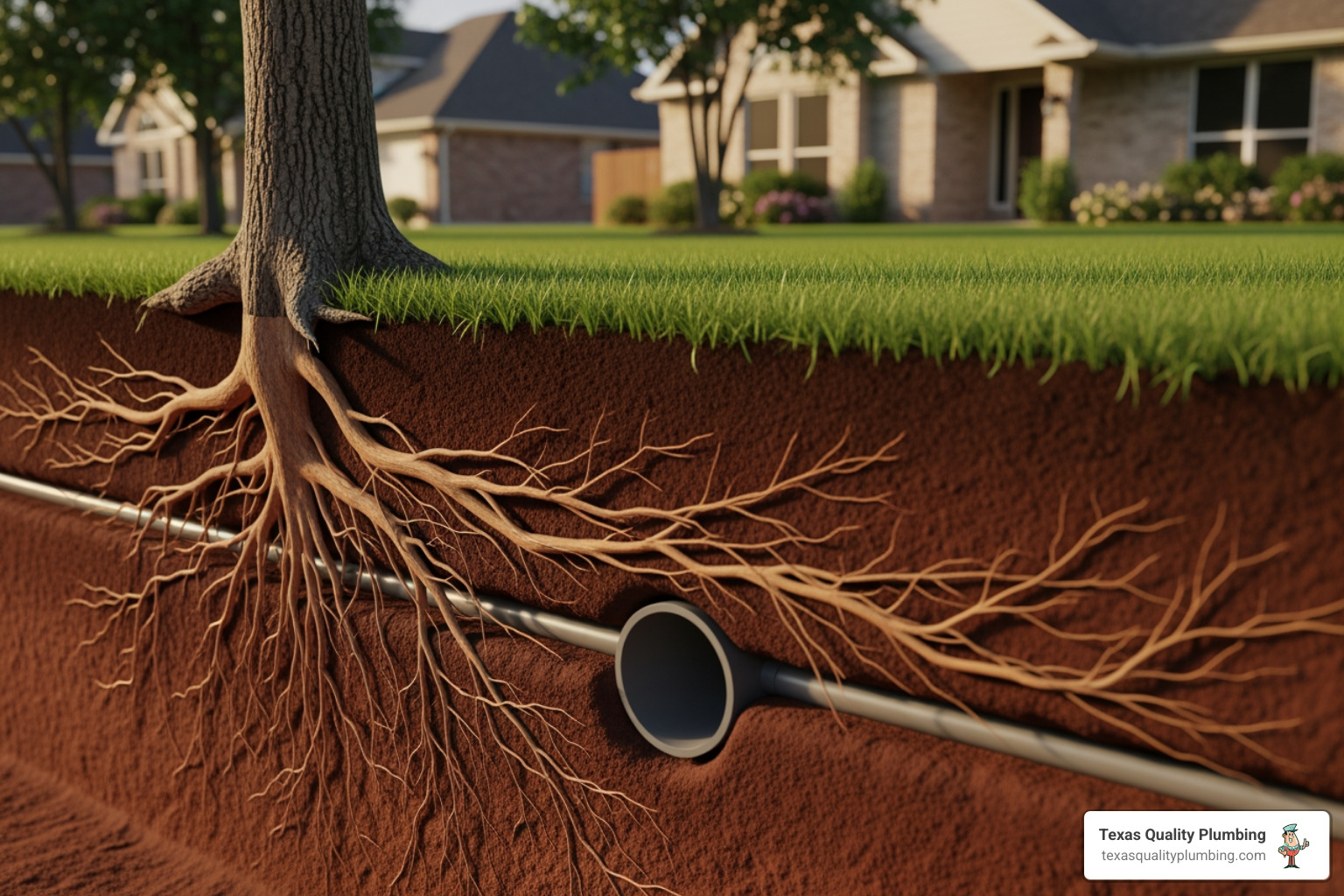
The process usually starts small. A loose pipe joint, pinhole leak, hairline crack, or separated connection releases just enough vapor to attract fine feeder roots. Those first roots are tiny, almost thread-like. They slip into the opening, then begin to grow inside the pipe where moisture and nutrients are much more abundant.
Once inside, the root mass works like a net:
- It snags toilet paper
- It catches grease and soap residue
- It traps solids and wipes
- It slows flow and creates air pockets
That is why a line with roots may not fail all at once. It often starts with occasional slow drains, then recurring clogs, then backups. Left alone, the roots thicken, the blockage grows, and the pipe itself weakens.
For more detail on how these invasions develop, see Identifying Tree Root Intrusions and Root Intrusion Signs in Sewer Lines.
Why Texas clay soil makes root intrusion worse
Texas clay is a big part of the story. Expansive clay does not sit quietly underground. It moves.
When it dries out, it contracts and pulls away from pipes. When it gets soaked, it expands and presses against them. Over time, that shrink-swell cycle can:
- Shift sewer lines out of alignment
- Separate joints
- Crack older clay or cast iron pipes
- Create low spots where wastewater sits
- Put extra stress on fittings, especially in aging systems
This same movement can also affect foundations, which is one more reason plumbing and soil issues often seem to show up together in Texas. If the pipe moves even a little, roots only need the tiniest opening to begin their work.
Why fall rains and drought cycles increase root activity
Many homeowners assume root problems slow down in fall. Unfortunately, that is not always true.
In Texas, drought periods make roots more aggressive in searching for dependable water. Then fall rains soften the ground and make it easier for roots to move through soil toward a moisture source. Trees are also still strengthening root systems before winter dormancy. That combination can make autumn a sneaky high-risk season for sewer trouble.
In practical terms, root intrusion often worsens when:
- Summer drought has stressed trees
- Rain returns and loosens the soil
- Existing pipe leaks have been releasing vapor for weeks or months
- Mature trees are already near the sewer path
Which Trees and Homes Face the Highest Risk
Some properties are simply more vulnerable than others. If you have large established shade trees and an older sewer line, your risk goes up fast.
The highest-risk combination usually includes:
- Mature trees with wide, thirsty root systems
- Homes built before 1986
- Older cast iron, clay, or other aging sewer materials
- Yards with shifting clay soil
- A history of recurring clogs or sewer odors
Texas tree species most likely to damage sewer lines
In Houston-area landscapes, several tree types are known for aggressive or wide-ranging roots. The ones homeowners should watch most carefully include:
- Live oak
- Willow
- Maple
- Sycamore
- Elm
These trees are not “bad” trees. They are just very efficient at finding water. Water-hungry species with broad root zones are much more likely to push toward leaking lines, especially during drought.
Safer landscaping choices come later in this guide, but if one of the trees above is planted near your sewer route, we recommend being proactive rather than waiting for your toilets to start gurgling their opinions.
Why older Texas homes built before 1986 are more vulnerable
Older Houston-area homes are often dealing with sewer materials that root systems love to exploit.
Pre-1986 homes are more likely to have:
- Cast iron sewer lines
- Clay pipe sections
- Aging joints that have loosened over time
- Interior corrosion and flaking
- Pipe walls weakened by decades of use
Cast iron is especially vulnerable because it can corrode from the inside. As the interior flakes and roughens, debris catches more easily, and the pipe becomes less structurally sound. Clay pipes can crack or separate at joints. Both create ideal root entry points.
That is why homeowners in older neighborhoods should take repeated drain issues seriously. They are often symptoms of a bigger underground problem, not just a random clog.
Can modern PVC pipes still suffer root intrusion?
Yes. PVC is more resistant to root intrusion than older materials, but it is not magic armor.
Roots can still get into PVC systems if:
- Joints were installed poorly
- Fittings have shifted from soil movement
- The line has cracked under pressure
- There is a sag or belly that holds water
- Connections have separated
Modern pipe materials reduce risk, but they do not eliminate it. If the line has an opening, roots may find it.
Early Warning Signs Homeowners Should Never Ignore
Root intrusion usually gives warnings before a full sewer disaster. The problem is that those warnings are easy to dismiss as “just a clog.”
Common early signs include:
- Slow drains in more than one fixture
- Toilets that bubble or gurgle
- Frequent clogs that keep coming back
- Sewage odors inside or outside
- Wet, mushy, or unusually green patches in the yard
- Small sinkholes or sunken areas above the sewer line
If you want a deeper look at symptom patterns, read Signs of Hidden Sewer Line Problems and Root Intrusion Signs in Sewer Lines.
How tree roots invade your sewer pipes in texas soil before a full backup happens
A full blockage usually comes at the end of a slow progression.
Here is what often happens first:
- Fine roots enter through a crack or joint.
- They form a thin web inside the pipe.
- Paper, grease, and solids start sticking to that web.
- Wastewater slows but still passes.
- Air gets trapped behind the blockage, causing gurgling sounds.
- The clog becomes thicker and more frequent.
- Eventually, flow stops and sewage backs up.
That slow buildup is why a line can seem “mostly okay” for months. Homeowners may snake a toilet, clear a drain, and think the issue is gone. But if the roots remain, the blockage returns.
Signs that mean you should call a professional plumber immediately
Some symptoms mean you should not wait and see.
Call right away if you notice:
- Multiple drains backing up at once
- Sewage coming up into a tub or shower
- Toilets bubbling when another fixture drains
- Strong sewer smell in the house or yard
- A sudden wet spot in dry weather
- A sinking patch or hole in the lawn
- Repeated main line clogs in a short time
These are signs the problem may already be in the main sewer line, not just one branch drain.
How to Confirm Root Intrusion and What Actually Fixes It
You cannot diagnose root intrusion accurately by guesswork alone. The best way to confirm what is happening is a professional sewer camera inspection.
A camera inspection lets us see:
- Whether roots are actually present
- Where they entered the pipe
- How severe the blockage is
- What material the sewer line is made of
- Whether the pipe is cracked, offset, or collapsed
This is why we recommend inspection before choosing a repair method. Without a camera, cleaning can become a temporary fix for a structural problem.
Helpful resources include Why Sewer Line Needs Inspection, Signs You Need Sewer Camera Inspection, and Sewer Camera Inspection Houston Guide.
How homeowners can confirm roots are inside the sewer line
The most reliable confirmation method is a camera run through the sewer cleanout. Live HD footage shows the actual condition inside the line. In some cases, smoke testing may also help identify breaks or hidden leaks, but the camera is usually the clearest answer.
A professional inspection can pinpoint:
- The exact location of the root mass
- The size of the blockage
- Whether roots entered at a joint, crack, or break
- Whether the pipe can be cleaned or needs repair
If your home has recurring whole-house drain issues, especially with mature trees nearby, that is usually enough reason to schedule an inspection.
The most effective ways to remove roots from sewer pipes
The right solution depends on how much damage has already occurred.
Common root-removal methods include:
- Mechanical augering or root cutting
- Hydro jetting to clear roots and flush debris
- Targeted root-inhibiting treatments in some situations
- Follow-up maintenance to manage regrowth
Mechanical cutting can break through a root mass and restore flow. Hydro jetting can then scour the pipe walls and wash out debris that the roots trapped. For many homeowners, that combination is much more effective than simply poking a hole through the clog and hoping for the best.
You can learn more about pressure-based cleaning in Key Benefits of Hydro Jetting.
One important reality check: cleaning removes roots from inside the pipe, but it does not fix the crack, bad joint, or failed section that invited them in. That is why roots often come back if no repair follows.
When cleaning is not enough and sewer repair is the real solution
Sometimes the pipe is too damaged for cleaning alone to be a lasting answer.
Repair or replacement may be necessary when the inspection shows:
- A collapsed section
- Major joint separation
- Severe corrosion
- Repeated intrusion at the same point
- A cracked or broken pipe wall
- A belly or misaligned section that keeps collecting waste
Depending on the line condition, solutions may include spot repair, trenchless lining, pipe bursting, or full replacement. Trenchless methods can sometimes restore a line with less disruption to the yard, while severely damaged systems may need more extensive work.
For more on long-term solutions, see Root Invasion Problems Solved and Identifying Tree Root Intrusions.
How to Prevent Future Root Problems in Texas Soil
Prevention is a lot easier than dealing with sewage in the bathtub. That sentence is not glamorous, but it is true.
The best prevention plan combines smart landscaping, early inspections, and prompt sewer repairs when small defects appear.
| Strategy | Best for | What it helps prevent |
|---|---|---|
| Sewer camera inspection | Older homes, mature trees, recurring clogs | Catching roots before a backup |
| Root barriers | New landscaping or known risk zones | Deflecting roots away from sewer lines |
| Sewer line mapping | Before planting trees | Avoiding root placement over pipes |
| Repairing small defects early | Any home with line damage | Moisture leaks that attract roots |
| Upgrading aging sewer lines | Older homes with cast iron or clay | Repeat intrusion through failing materials |
| Balanced watering during drought | Clay soil properties | Extreme soil shrinkage and movement |
For ongoing maintenance tips, visit Plumbing Regular Sewer Camera Inspections.
Best prevention strategies for Houston-area homeowners
For homes in Houston, Katy, Cypress, Pearland, Kingwood, The Woodlands, Sugar Land, and nearby communities, we generally recommend these steps:
- Know where your sewer line runs before planting trees or large shrubs
- Keep aggressive-root trees well away from the sewer path
- Consider professional root barriers where appropriate
- Have older lines inspected regularly
- Keep the cleanout accessible
- Address slow drains early instead of waiting for a full backup
- Maintain balanced soil moisture during prolonged dry periods so clay does not shrink dramatically around pipes
Root barriers can be effective, but only when properly designed and installed. Their job is to redirect roots deeper or away from the pipe corridor, not simply annoy the tree into giving up.
Which trees are safer to plant near sewer lines in Texas
If you are planning new landscaping, lower-risk options can help protect underground plumbing. Safer choices often include:
- Magnolia
- Redbud
- Crape myrtle
- Yaupon holly
- Mediterranean fan palm
- Smaller ornamental species with lower water demand
No tree is completely risk-free if planted too close to a sewer line, but these are generally less aggressive than thirsty shade trees like willow or sycamore.
A practical rule: identify the sewer route first, then plan the landscaping second. Not the other way around after a shovel and a prayer.
How often sewer lines should be inspected in high-risk Texas areas
Inspection frequency depends on risk level.
A good rule of thumb is:
- Every 2 to 3 years for older homes with no active symptoms
- Annually for homes with mature high-risk trees near the line
- After major drought periods if you already have a history of drain issues
- Before buying an older home
- Any time recurring clogs or gurgling show up across multiple fixtures
If your home was built before 1986, or you have had root problems before, routine inspections are especially important.
Final Takeaway for Homeowners Dealing With Root Intrusion
The short version is this: tree roots do not need a giant pipe break to cause a giant plumbing problem. In Texas soil, tiny cracks and shifting joints are often enough.
That is why how tree roots invade your sewer pipes in Texas soil matters so much for homeowners in Houston and surrounding communities. The combination of expansive soil, drought stress, mature trees, and aging sewer lines creates ideal conditions for root intrusion. Once roots get in, they trap debris, slow drainage, and can eventually crack or collapse the pipe.
If you are seeing slow drains, gurgling toilets, wet yard patches, or repeat backups, do not ignore them. Early diagnosis usually means more options and less disruption.
At Texas Quality Plumbing, we help homeowners across Greater Houston find the real cause of sewer problems with fast, efficient service and guaranteed 24-hour appointments. If you suspect root intrusion, the smartest next step is a professional inspection so you know exactly what is happening underground.
For more information about repairs and solutions, visit More info about sewer services.