

Why Texas Soil Is One of the Biggest Threats to Your Home’s Plumbing
If you’re trying to figure out how to protect your pipes from Texas soil conditions, here’s the short answer:
- Maintain consistent soil moisture around your foundation year-round using soaker hoses or drip irrigation.
- Direct water away from your home with proper grading and well-maintained gutters.
- Avoid planting large trees directly above buried sewer or water lines.
- Schedule a professional sewer camera inspection every two to three years to catch soil-related damage early.
- Upgrade aging cast iron or clay pipes to modern materials better suited to shifting ground.
- Call a licensed plumber immediately if you notice gurgling drains, sewage odors, unexplained wet spots, or a sudden spike in your water bill.
Beneath almost every home in the Houston area and across the state, the ground is constantly moving. Texas sits on some of the most geologically active soil in the country — expansive clay that swells when it rains and shrinks when it dries out. That constant push and pull puts enormous stress on buried pipes, joints, and sewer lines. In fact, expansive clay soils cause more property damage in the United States than all other natural hazards combined — more than earthquakes, floods, tornadoes, and hurricanes. And unlike a storm you can see coming, soil movement works silently, underground, often for years before the damage becomes obvious.
For busy Houston homeowners, that’s a serious problem. A slow-building pipe failure from shifting soil can go unnoticed until it becomes a flooded foundation, a collapsed sewer line, or a water bill that’s suddenly double what it should be.
This guide walks you through exactly what’s happening under your home, what to watch for, and the most effective steps you can take to protect your plumbing before the damage gets out of hand.
The Science of Shifting Ground: How Texas Soil Damages Buried Pipes
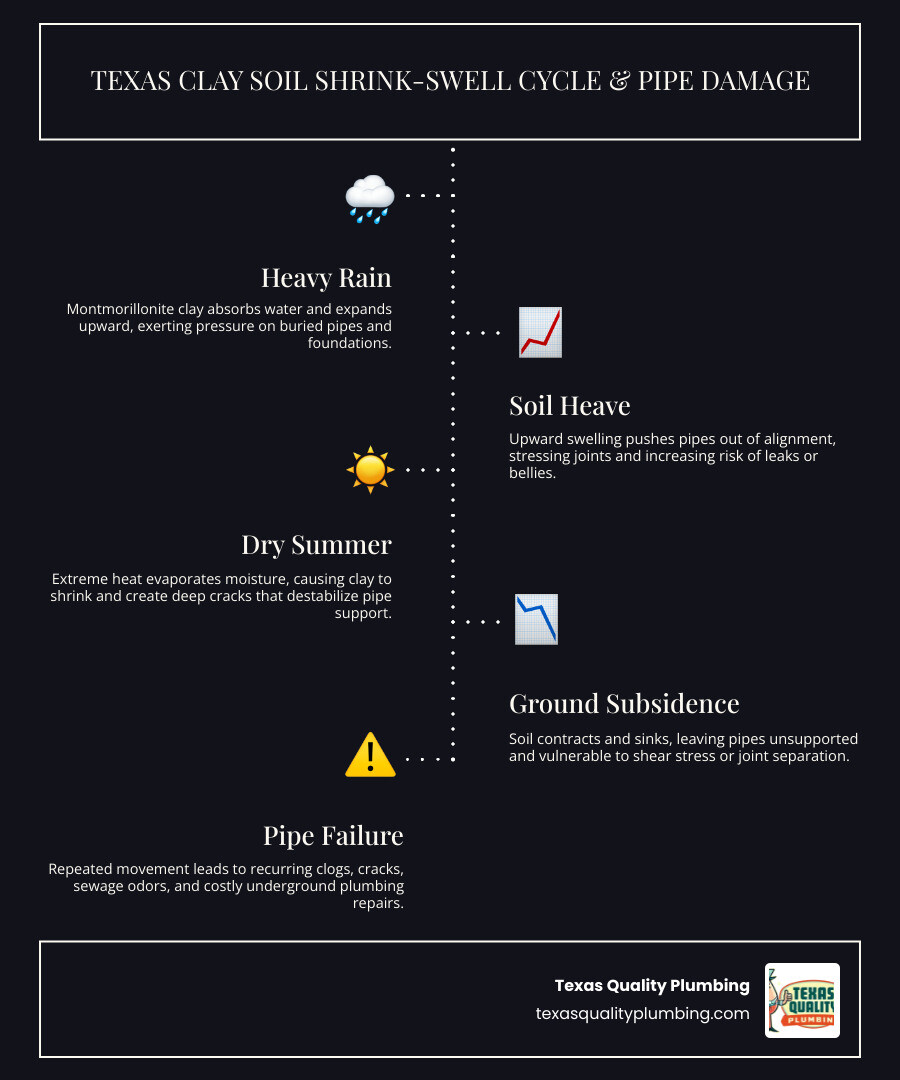
To truly understand how to protect your underground plumbing, we have to look at the geology beneath our feet. In Greater Houston communities like Katy, Sugar Land, and Pearland, the dominant soil type is a heavy, dark, highly expansive clay often nicknamed “black gumbo.” Geotechnically, these soils are rich in montmorillonite minerals, which act like a giant, dense sponge.
When a heavy Texas storm rolls through, this clay eagerly drinks up the water, expanding dramatically in volume. During our hot, dry summer months, the water evaporates, and the clay shrinks, leaving deep, visible fissures in the earth. This relentless expansion and contraction is known as the shrink-swell cycle.
This movement does not happen uniformly. One side of your home’s yard might remain shaded and damp, while the other side baked in the direct July sun. This imbalance causes “differential settlement” — where one section of your foundation and subgrade soil sinks or rises faster than another.
When the soil shifts, it carries your plumbing with it. This movement subjects buried pipes to three primary physical forces:
- Pipe Shear: As one section of soil drops and the adjacent section remains stable, a shearing force is applied directly to the pipe. Brittle materials like old cast iron or clay will simply snap under this pressure.
- Joint Separation: Shifting ground pulls pipes away from their connections. Even a tiny fraction of an inch of movement can break the seal at a joint, allowing water to escape and tree roots to enter.
- Sewer Bellies and Sagging: When dry soil contracts and creates empty pockets or voids beneath a sewer line, the weight of the pipe and the wastewater inside causes it to sag. This low spot, or “belly,” disrupts the natural slope of your drain line, leading to persistent clogs.
In fact, engineering studies have shown that non-isolated PVC sanitary sewer piping has cracked where the subgrade shifted by as little as a half-inch. If you want to dive deeper into how dry weather specifically initiates this damage, read our article on How Dry Soil Can Crack Your Underground Plumbing.
Warning Signs That Soil Movement Is Affecting Your Plumbing
Because your plumbing is buried beneath feet of dirt and concrete, you cannot see the physical strain it is under. However, your home will drop clues when the soil’s movement begins to compromise your pipes.
Here are the most common warning signs every Texas homeowner should watch for:
- Gurgling Drains and Recurring Clogs: If your toilets, sinks, or showers bubble or drain slowly, it often points to a sewer line belly or joint separation. When soil shifts and reverses the slope of your pipes, waste can no longer flow downward smoothly.
- Unexplained Water Bill Spikes: A sudden 20% or higher increase in your monthly water bill without a change in your household usage is a classic indicator of a hidden supply line leak.
- Lush, Overly Green Patches of Grass: If a specific area of your lawn is suddenly thriving, exceptionally green, or spongey underfoot while the rest of the yard is dry, you likely have an underground pipe leak feeding the grass from below.
- Sewage Odors: If you smell sewer gas inside your home or near your outdoor cleanouts, a shifting pipe has likely cracked or separated, letting gases escape.
- New or Growing Foundation Cracks: Cracks wider than 1/8 inch in your foundation, interior drywall, or brick veneer often signal that the soil beneath your home is shifting unevenly — a movement that almost always stresses the pipes embedded within or beneath the slab.
Keeping an eye out for these subtle shifts is your best line of defense. To learn more about what might be happening out of sight, explore our guide on Hidden Pipe Problems in Properties.
The Destructive Feedback Loop: Leaks and Soil Instability
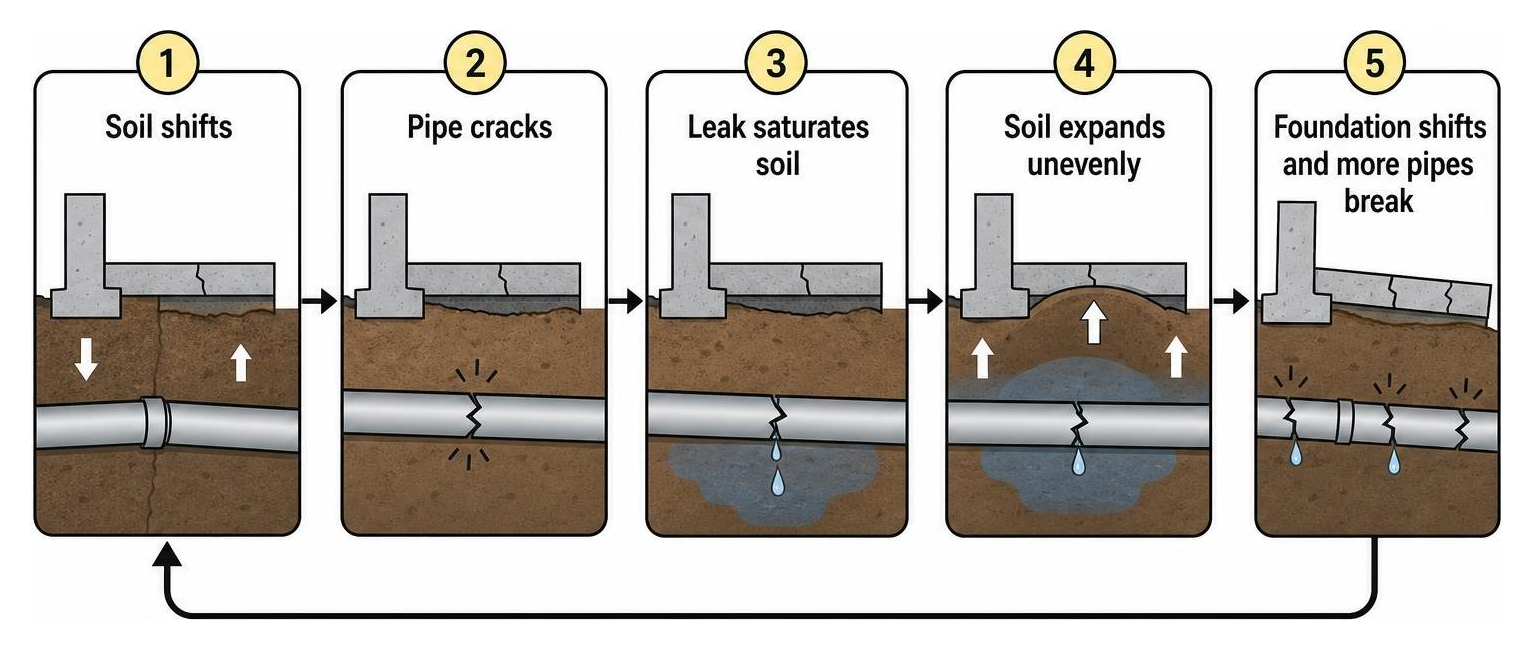
One of the most dangerous aspects of soil-related plumbing damage is the vicious feedback loop it creates. The cycle usually begins with a minor joint separation or hairline fracture caused by normal seasonal soil movement.
Once a pipe begins to leak, it introduces a constant source of moisture into the surrounding clay soil. This localized water saturation causes the clay in that specific spot to expand rapidly, while the surrounding soil remains dry. This uneven expansion puts immense, concentrated pressure on the foundation slab and the neighboring sections of the pipe.
As the foundation shifts upward or settles unevenly due to this localized swelling, it cracks more pipes, creating a “zipper effect” of multiple breaks along your plumbing lines. The resulting structural damage to your home can be incredibly costly to repair, sometimes leading to warped flooring, stuck doors, and compromised walls.
Breaking this cycle requires professional intervention to locate the leak, repair the pipe, and stabilize the moisture levels. We have spent years helping local families resolve these exact issues; you can read about our approach in Texas Quality Plumbing Solving Clay Soil Plumbing Damage in Houston.
How to Protect Your Pipes From Texas Soil Conditions
While we cannot change the geology of Greater Houston, we can absolutely control how we manage our properties to minimize soil movement. The secret to protecting your pipes is stabilizing the moisture content of the soil around your home. If the clay stays relatively consistent throughout the year, it won’t undergo the dramatic shrink-swell cycles that snap pipes.
Additionally, managing the physical expansion of your plumbing lines during our intense summer heat is crucial. To understand the physics behind this, check out The Science of Summer Pipe Expansion and Water Pressure.
Practical Landscaping and Watering Steps to Protect Your Pipes From Texas Soil Conditions
You can dramatically reduce the stress on your home’s plumbing by implementing a few smart, daily habits and landscaping strategies:
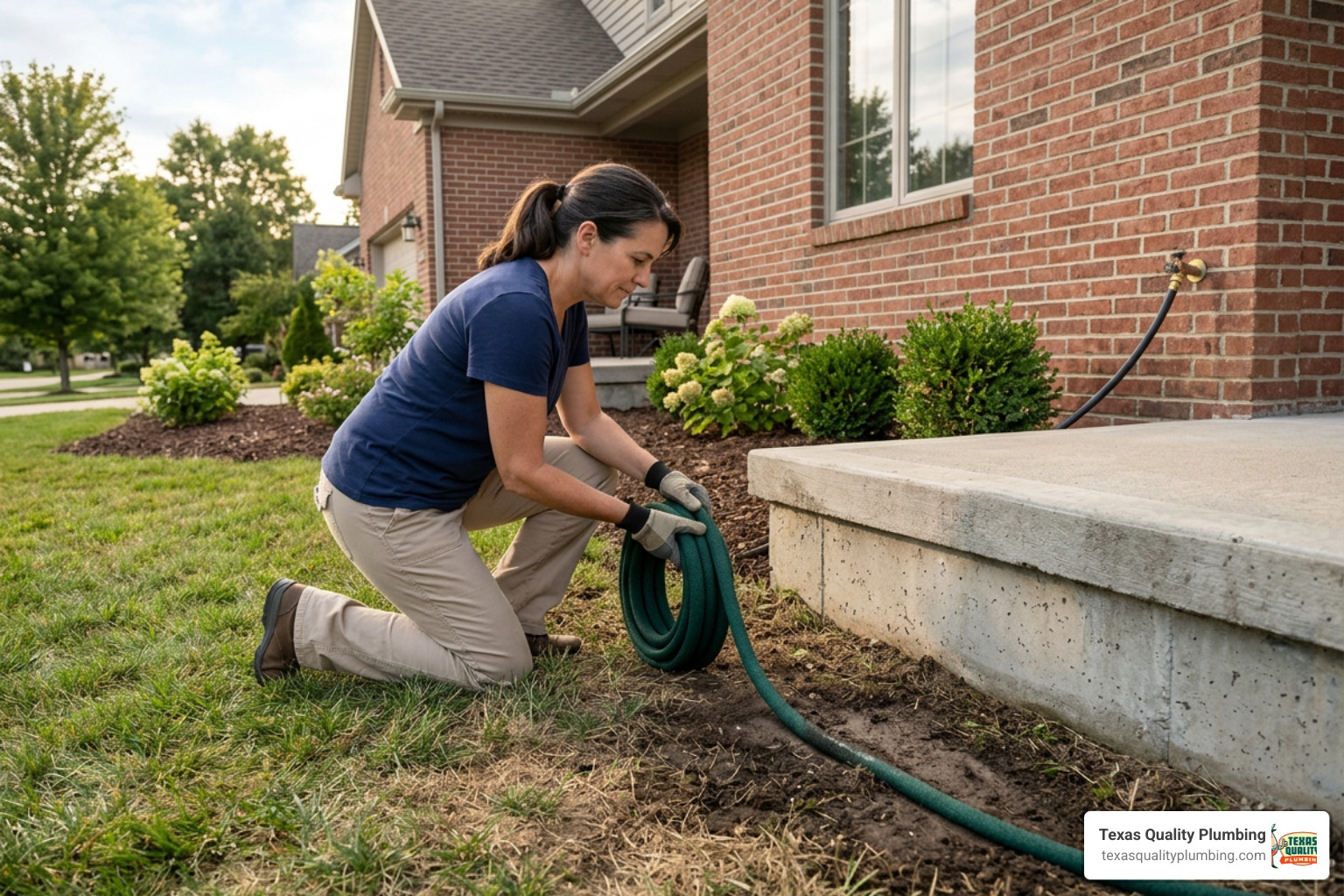
- Foundation Watering: During hot, dry stretches, use soaker hoses or a dedicated drip irrigation system around your home’s perimeter. Place the hose 8 to 18 inches away from the foundation. Run it at low pressure for a few hours to keep the soil moist. If you see a gap opening up between the dirt and your concrete slab, it’s a clear sign your soil is too dry.
- The “Cycle and Soak” Method: Instead of running your sprinklers in one long session — which leads to runoff on heavy clay — split your watering into multiple shorter cycles spaced an hour apart. This gives the stubborn clay time to absorb the moisture deeply.
- Smart Drainage and Grading: Ensure the ground slopes away from your foundation at a slope of at least six inches over the first ten feet. Keep your gutters clean and extend downspouts at least five to ten feet away from the home so heavy rain doesn’t pool near your plumbing lines.
- Thoughtful Tree Placement: Water-hungry trees like live oaks, magnolias, and weeping willows have aggressive root systems that will travel long distances to find moisture. Avoid planting these trees close to your underground utility lines, and consider installing root barriers to protect your pipes.
- Winter Prep: Extreme weather swings don’t just happen in the summer. Sudden freezes can cause shallow soils to shift and freeze. Protect your outdoor faucets and shallow lines by reviewing our guide on Preparing Your Plumbing for Winter.
When to Invest in Professional Upgrades to Protect Your Pipes From Texas Soil Conditions
If your home was built before the late 1980s, your plumbing system may be highly vulnerable to soil movement due to the materials used at the time. Older homes in established Houston neighborhoods often rely on cast iron supply lines and clay sewer pipes.
Clay pipes are incredibly brittle. When the ground shifts even slightly, clay joints slip or crack, inviting tree roots to enter. Cast iron, while strong, corrodes internally over time, making it weak and highly susceptible to snapping under soil pressure.
Upgrading to modern materials is often the most cost-effective long-term solution. Today, we recommend upgrading to Schedule 40 PVC or High-Density Polyethylene (HDPE). These plastic materials are incredibly durable, smooth, and possess a degree of natural flexibility that allows them to bend slightly with soil movement rather than snapping.
If you suspect your home still has its original, fragile lines, take a moment to read about the Signs of Aging Pipes in Property and the Signs of Pipe Corrosion in Home to help you evaluate your system’s risk.
Professional Solutions: Diagnostics and Trenchless Repairs
When soil-related pipe damage does occur, modern plumbing technology allows us to diagnose and repair the issue with minimal disruption to your life and landscaping.
The first step in any professional evaluation is a high-definition sewer camera inspection. By feeding a flexible, waterproof camera down your sewer line, we can see exactly what is happening inside your pipes in real-time. This 20-minute process reveals offsets, sags, cracks, and root intrusions without us having to dig up a single blade of grass.
If a pipe is damaged, you don’t always have to resort to the destructive, traditional method of digging a trench through your yard or jackhammering your home’s concrete slab. Today, trenchless repair methods offer a faster, cleaner alternative.
Here is how the two primary repair strategies compare:
| Feature | Traditional Trenched Repair | Trenchless Pipe Lining & Bursting |
|---|---|---|
| Excavation Required | Full-length open trenches through yards, driveways, or indoor slabs. | Minimal; usually requires only one or two small access pits. |
| Landscape Damage | Heavy; requires re-sodding, concrete patching, and rebuilding. | Very low; preserves landscaping, patios, and mature trees. |
| Process | Physically removing the old pipe and laying a new one in the trench. | Pipe Lining: Pulling an epoxy-saturated liner inside the old pipe and curing it to create a seamless “pipe within a pipe.” Pipe Bursting: Pulling a new HDPE pipe through the old one, fracturing the old pipe outward. |
| Lifespan & Durability | Variable based on material; subject to future joint separation. | Excellent; seamless epoxy and HDPE are highly resistant to root intrusion and future soil shifts. |
| Typical Duration | Several days to over a week. | Often completed in a single day. |
For a deeper look into choosing the best approach for your home’s unique layout, read our guide on Deciding Between a Quick Sewer Fix and a Total Pipe Replacement.
Frequently Asked Questions About Texas Soil and Plumbing
Are newer homes with PVC piping still at risk from shifting soil?
Yes, absolutely. While modern Schedule 40 PVC and HDPE pipes are much more flexible and durable than older clay or cast iron, they are not completely immune to the sheer force of shifting Texas clay.
When expansive soil exerts thousands of pounds of pressure per square foot, it can still cause PVC joints to fail, crack, or pull apart. Furthermore, if the soil contracts and creates a void beneath a PVC line, the pipe will still sag, creating a “belly” that causes recurring clogs and slope reversal. No matter the age of your home, maintaining consistent soil moisture remains essential.
What should I do immediately if I suspect a pipe has burst?
If you suspect a pipe has burst due to soil movement or a sudden freeze, act quickly to minimize property damage:
- Shut Off the Water: Immediately close your home’s main water shut-off valve. This is usually located near your water meter by the street or where the main line enters your home.
- Turn Off Electricity: If the leaking water is near electrical outlets, appliances, or your breaker panel, turn off the electricity to those zones immediately to avoid safety hazards.
- Drain the Lines: Open your lowest outdoor faucets to drain any remaining water out of your pipes and away from your home.
- Document the Damage: Take clear photos and videos of any standing water, damp walls, or foundation cracks for your insurance company.
- Call a Professional: Contact a licensed plumber immediately to locate the break and perform a professional repair.
How often should Texas homeowners schedule a professional camera inspection?
Because Greater Houston sits on highly active clay soil, we recommend scheduling a professional video camera inspection every two to three years.
If you live in an area with particularly active soil, or if you have mature oak, pine, or magnolia trees within fifteen feet of your sewer line, an annual inspection is a smart preventative measure. Catching a minor joint separation or a small pipe sag early can save you from the massive headache of a sewer backup or foundation failure down the road.
Conclusion
Protecting your home’s plumbing from the relentless movement of Texas clay soil is all about proactive care. By managing your foundation’s soil moisture, grading your yard correctly, and upgrading fragile, aging pipes, you can keep the ground stable and your plumbing flowing smoothly.
If you suspect your pipes have already taken a beating from our local soil conditions, or if you want the peace of mind that comes with a professional camera inspection, the team at Texas Quality Plumbing is here to help. We provide reliable, expert plumbing repairs, leak detection, and maintenance services across the Greater Houston area — including Houston, Sugar Land, Katy, Spring, The Woodlands, Porter, and surrounding communities.
Unsure if it’s time to modernize your home’s plumbing system? Explore our detailed articles on When to Consider Repipe Service and Why Consider Repipe Services to learn more about the process.
Ready to secure your home’s long-term stability? Contact us today or visit our Texas Quality Plumbing Repiping Services page to schedule your professional evaluation!